Hi Dino Gang,
As we head into spooky season, I’m looking forward to the cooler nights, apple cider, and all the eerie vibes. And speaking of eerie vibes, these new dinosaur discoveries are quite chilling too!
From a monstrous megaraptor caught with a crocodile leg in its jaws, to evidence that dino blood might actually survive the ages… the science this month will have you on the edge of your seat!
And if you missed the buzz: I just dropped my new merch collection featuring the iconic Triceratops! Because you’re subscribed to my newsletter you get 10% off in the shop all month long. Just use code NEWSLETTER at checkout! 🦖
USE CODE NEWSLETTER FOR 10% OFF
So scroll on, because if you thought you knew how dinosaurs lived, fought, and evolved … think again 👇

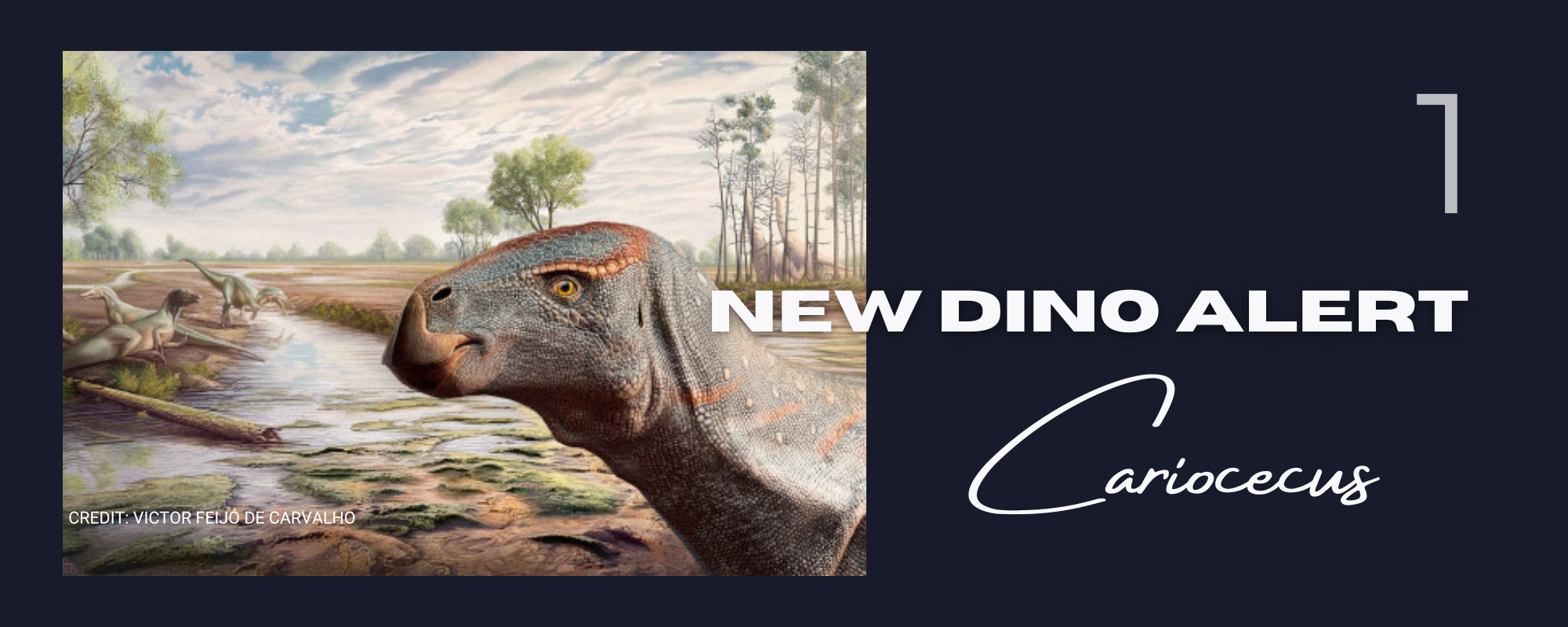
A new dinosaur was discovered and it completely changed our understanding of plant eating dinosaurs! Cariocecus is a new dinosaur that lived in Portugal 123 million years ago. This dinosaur was about 16 feet (5 meters) long and featured a beaked snout and a thumb spike like its close relative Iguandodon. There are many things that make Cariocecus interesting, but the most important is that it pieces together the evolutionary history of the Ornithpods. By tracing back the relatives of Cariocecus, it was found that Ornithopods originated in South America and migrated into North America during the Jurassic. Because Europe and North America were connected during this time, the ancestors of Cariocecus then migrated into Europe to evolve into Iguanodonts and the early ancestors of Hadrosaurs.
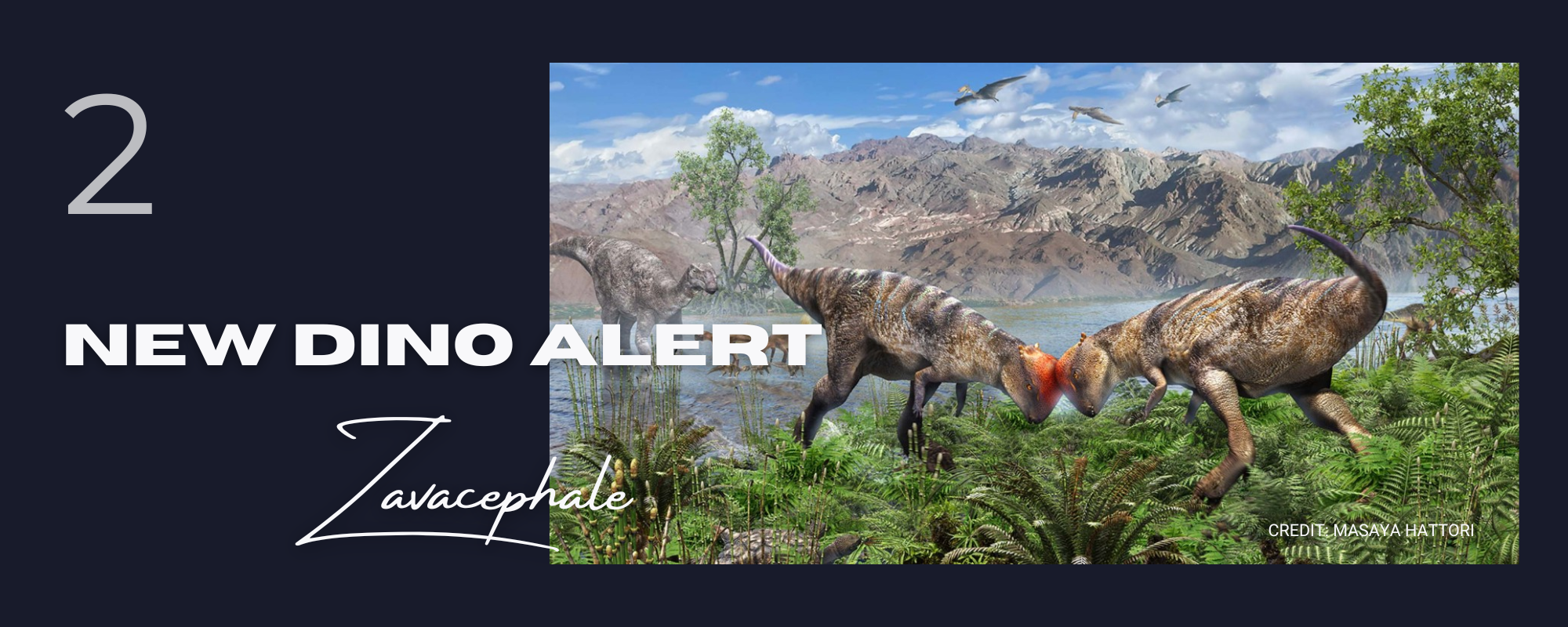
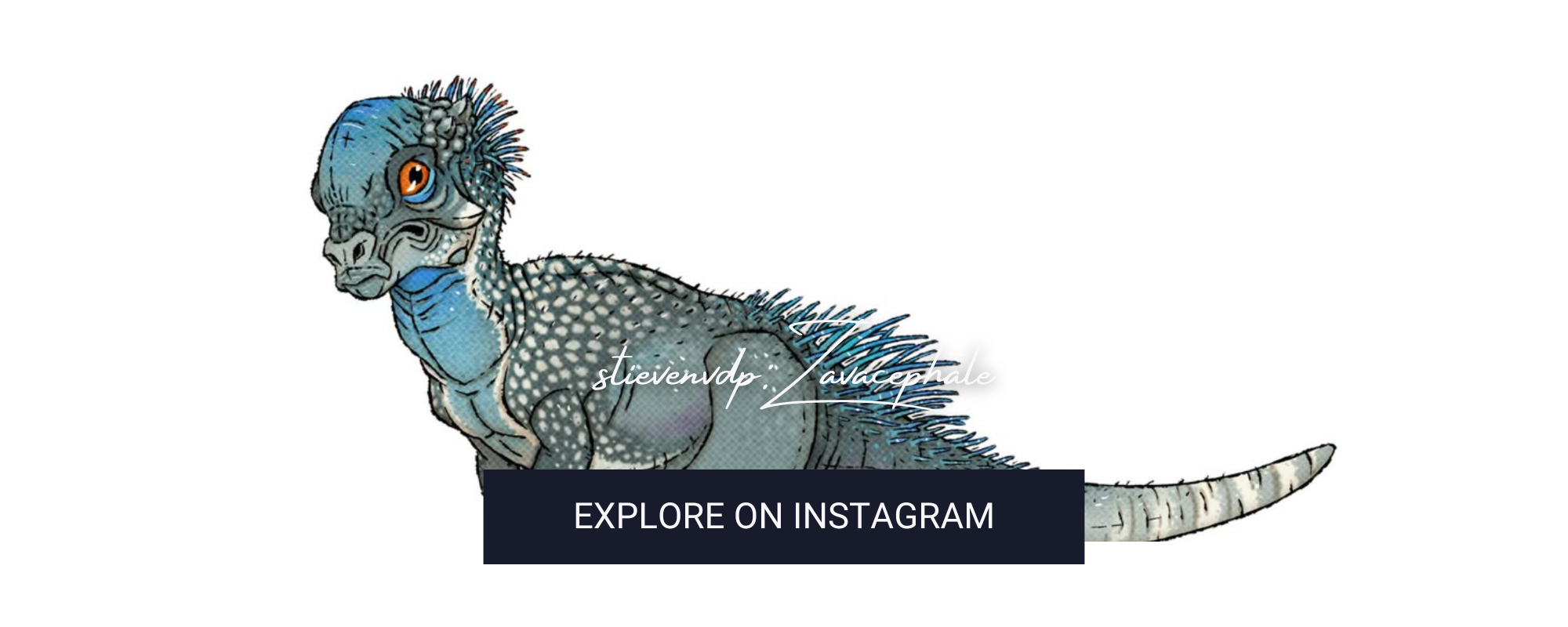
A new dinosaur was discovered and it was the earliest dome-headed dinosaur to ever exist! Zavacephale is a new pachycephalosaur that lived in Mongolia 110 million years ago. It was relatively small - only 3 feet or 1 meter long - and sported a pretty large domed head. Given that it lived 110 million years ago, Zavacephale is now the oldest dome-headed dinosaur by about 30 million years! It was thought that this group of dinosaurs started to pop up around 80 to 70 million years ago, which was not long before dinosaurs went extinct. But thanks to Zavacephale, we know that these dinosaurs evolved during a period of global warming. It seems that after this global warming stopped and the Earth began to cool down, the descendants of this dome-headed dinosaur began to diversify across Asia and North America.
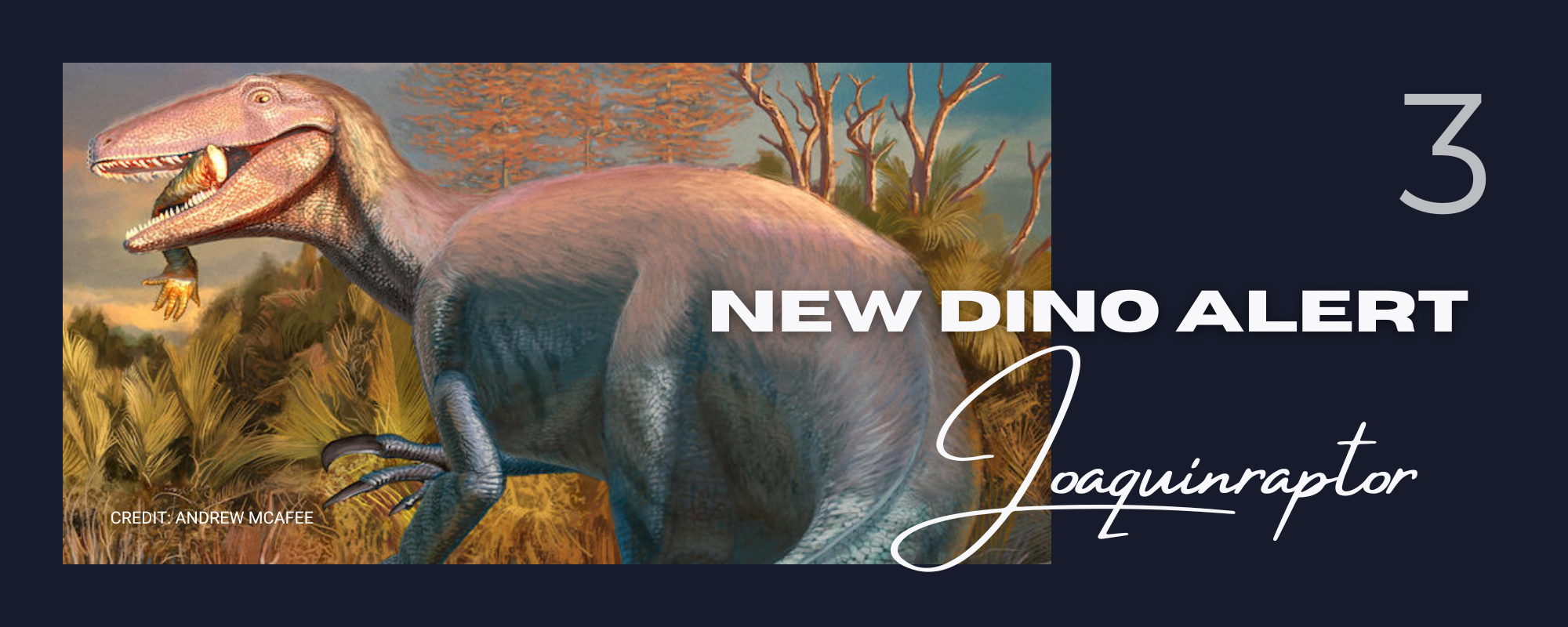
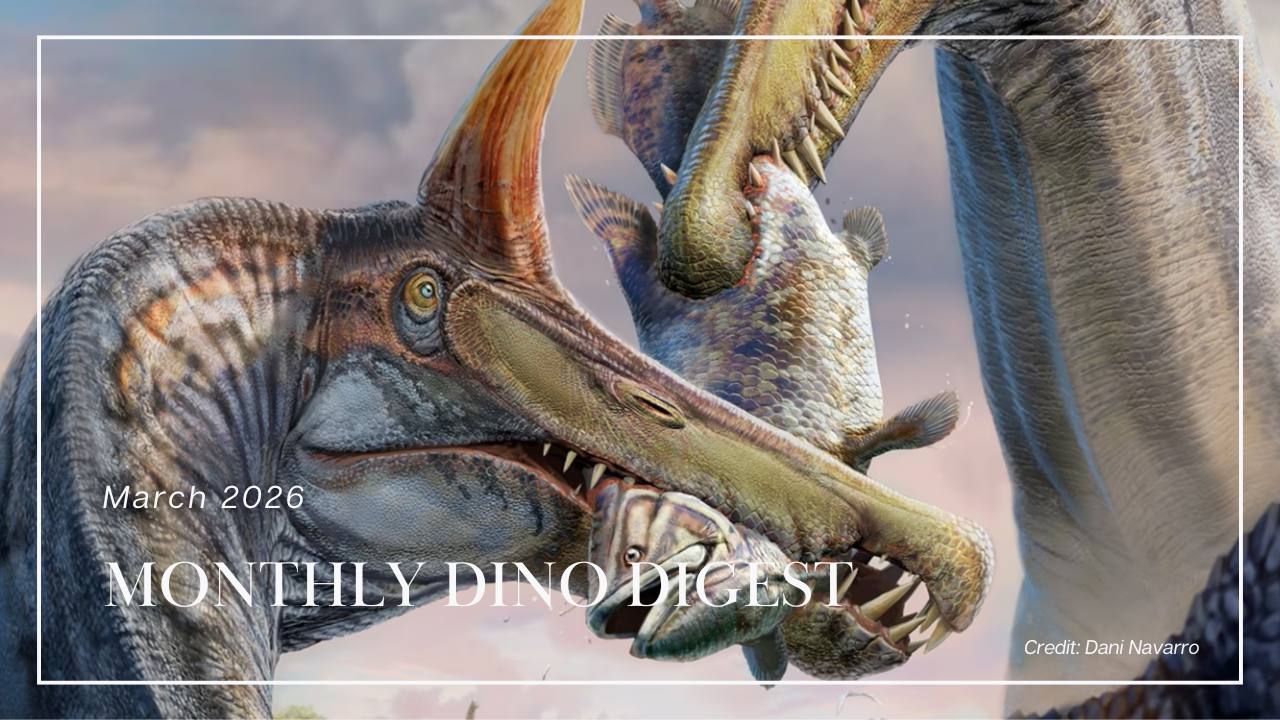
A new dinosaur was discovered and we know exactly what it ate! Joaquinraptor is a new megaraptorid that lived in Argentina 66 million years ago. This fearsome predator was 23 feet or 7 meters long, weighed about 2,284 pounds or 1,036 kilograms, and featured massive 5 and a half inch or 140 mm long claws. The reason this dinosaur is so cool is because it was found with a severed crocodile leg still in its mouth! The diet of these dinosaurs has always been a mystery because they had skulls and claws unlike most other predators. But Joaquinraptor shows that these apex predators were strong enough to be able to take down crocodiles. They likely used their powerful and strong claws to snatch up crocodiles out of rivers and delivered powerful slashing bites with their slender jaws.
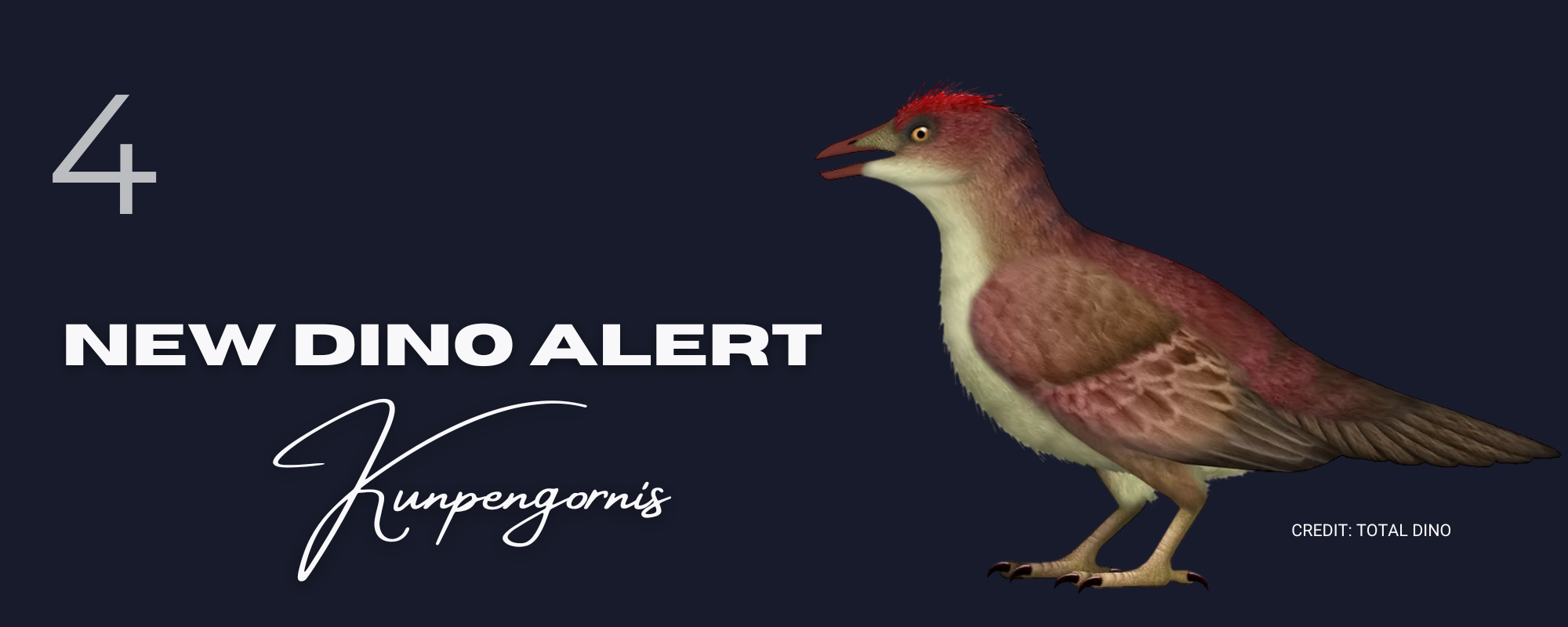
A new dinosaur was discovered and we also know exactly what this one ate! Kupengornis is a new bird that lived in China 117 million years ago. It was a relatively small bird that was about 15 inches or 38 cm long and still had small sharp teeth in its beak. This bird is important because it was found with fish bones in its stomach. But that’s not all: Many of Kupengornis have been known to eat fish and have skulls designed for catching fish. All of this suggests that early birds primarily ate fish and only diversified much later in their evolution.
New research has revealed that the science of Jurassic Park may not be as far-fetched as you think! Soft tissue and blood has been practically impossible to preserve in fossils because they are fragile and break down quickly. However, paleontologists examined some exceptionally well preserved fossils of Brachylophosaurus and T. rex to see how much soft tissue can actually be preserved. To their surprise, they found that components of blood molecules were found within bones! These components were haema, a compound found within hemoglobin which itself is a protein within red blood cells that carries oxygen. This haema was able to stay preserved due to the chemical interactions between the iron in surrounding rocks. All of this suggests that soft tissue like blood may be able to stay intact over millions of years given the perfect circumstances!


—
Q: Can a Paleontology enthusiast contribute to the field of Paleontology?
A: Yes! I think science communication is so important and you don't need to be an actual paleontologist to do that. People are really dying to learn about science, and everyone loves dinosaurs. So one way you can contribute is by teaching people about the new research coming out. It's also important to explain why this new research is important. Every new dinosaur tells a story, even if it's not immediately obvious. As long as you make it fun and engaging, you can make a huge contribution!
Q: Will we ever find a Tyrannosaurus rex that was bigger than Sue or Scotty?
A: It is technically possible that a T. rex would have been bigger than the two biggest specimens, but it would be really rare. A study by Mallon and Hone estimated that the chances of finding a T. rex that big is something like 1 in 4 million! They also estimated that it could take up to a thousand years of digging before we find a skeleton that big!
Q: What is your favorite non-dinosaur?
A: My favorite has to be Postosuchus! I remember watching the original Walking with Dinosaurs when I was a kid and thought it was so cool (I even got the toy for it). It was the apex predator of the American Southwest before the dinosaurs rose to dominance. Now after 20 years of research, I think it's way cooler; research suggests that it actually walked on two legs instead of all fours and may have even had the ability to crush bone.


|
6 New Dinosaurs Just Discovered in 2025 — and They’re STRANGE!! Watch the full video now 👆🏻




THANKS FOR BEING A PART OF THE DINO GANG,


Responses