Hi Dino Gang,
We’ve got a packed month, and you’re going to want to buckle in for this one.
First up: I just dropped one of the most advanced pieces of content I’ve ever made... for FREE 🤯
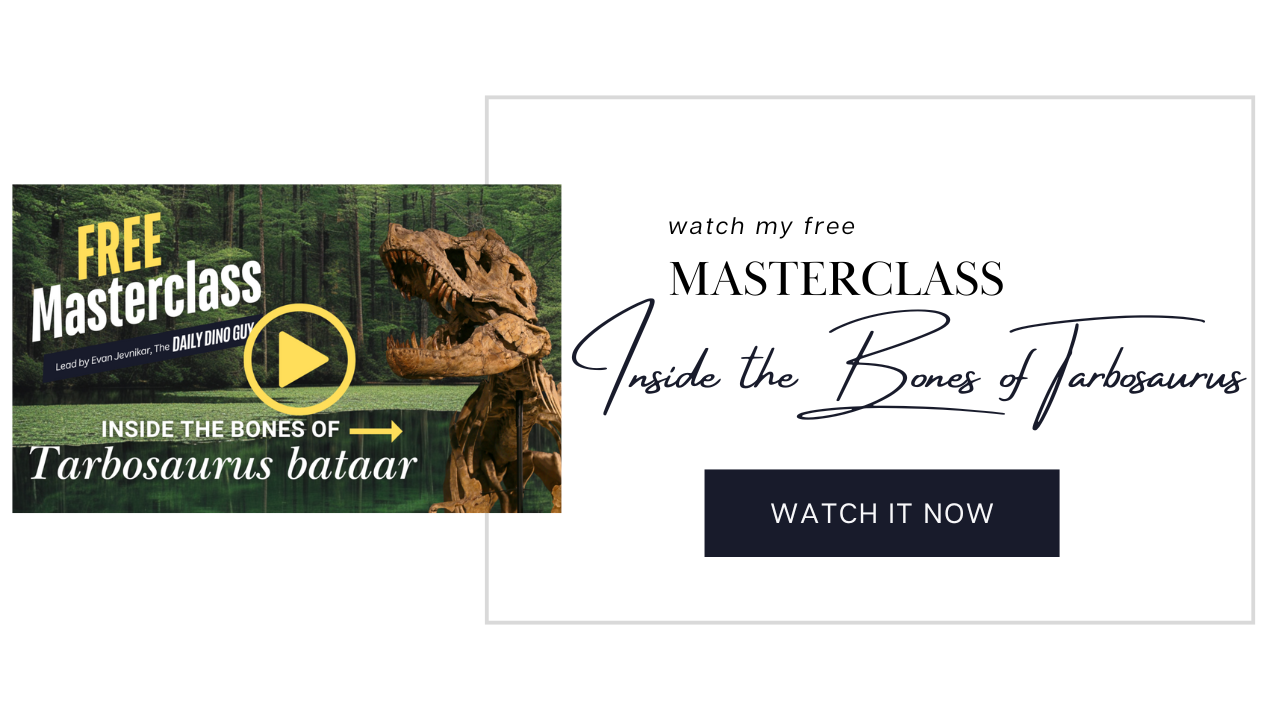
Inside the Bones of Tarbosaurus bataar, a free expert-level masterclass that takes you deep into how these massive predators actually grew. We’re talking growth curves, environmental stress markers in bone, and what this tells us about tyrannosaur evolution. If you’ve ever wanted to understand how apex predators like T. rex came to rule the Cretaceous… this is your moment.
But that’s just the start...
This month’s newsletter is loaded with some of the most exciting new research and fossil discoveries—including a brand-new dinosaur, plus a study that might totally rewrite what we know about dinosaur evolution.
One of the BEST things about being the Daily Dino Guy is that I'm able to sit down with paleontologists and talk about the incredible research they are doing. I had the privilege of sitting down with Milly Mead and talking about one of the strangest evolutionary phenomena that she discovered in Oviraptor arms! Click here if you want to hear more about this research directly from Milly through her masterclass lecture, available only in the Daily Dino Direct Cretaceous Tier. Psst... you can get a trial for just $3 right now using this link!
Now, let's dive into the full newsletter ⤵️

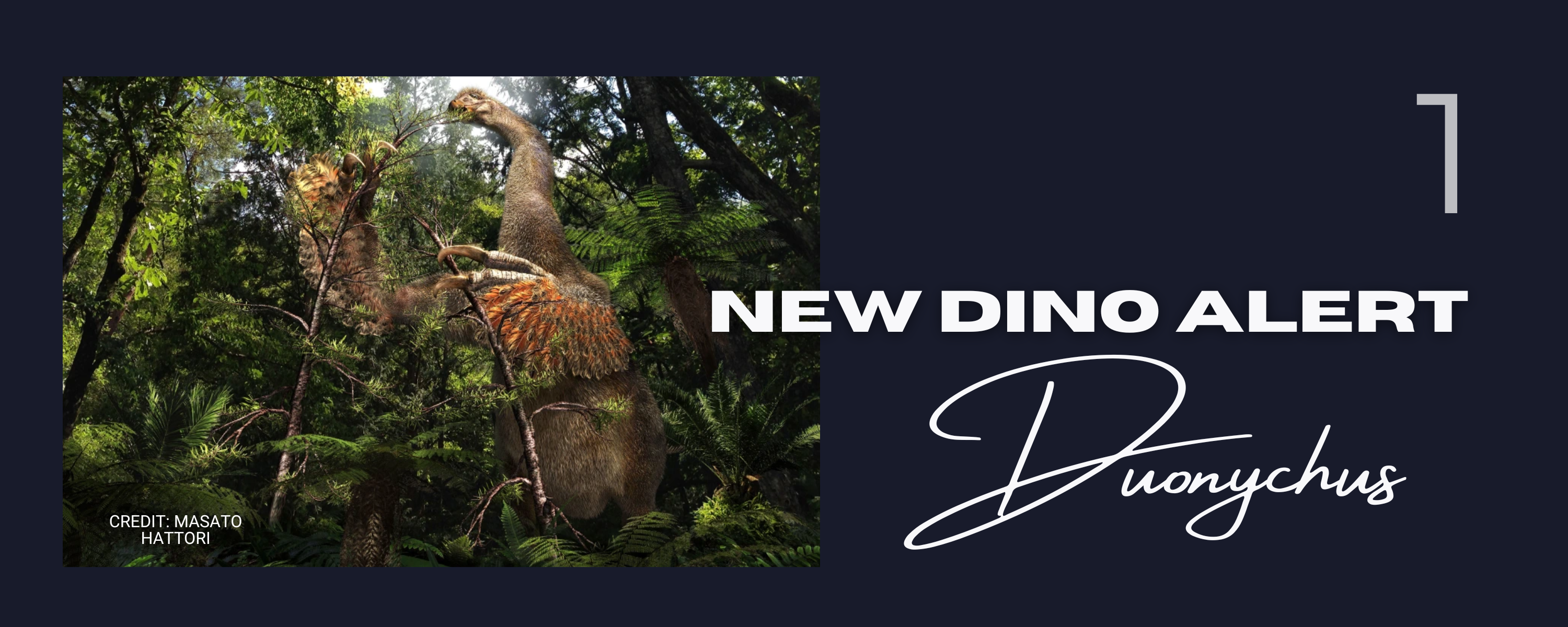
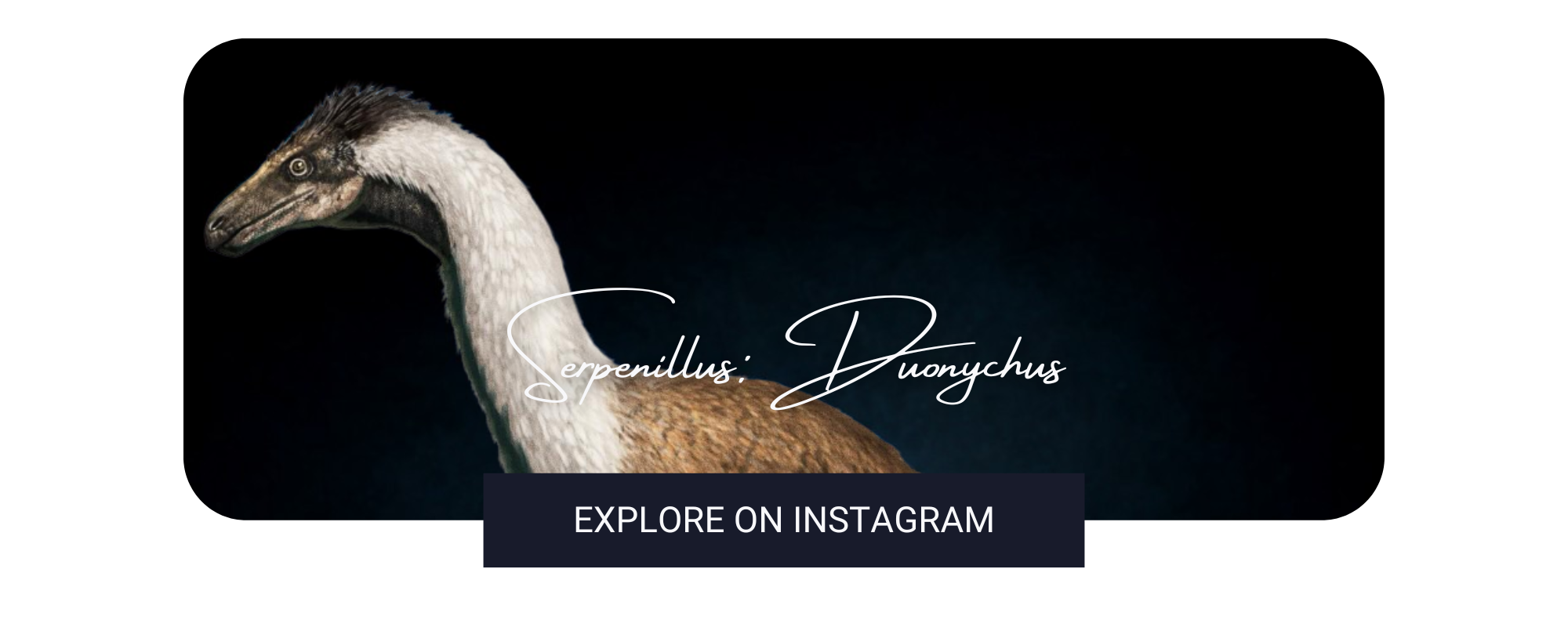
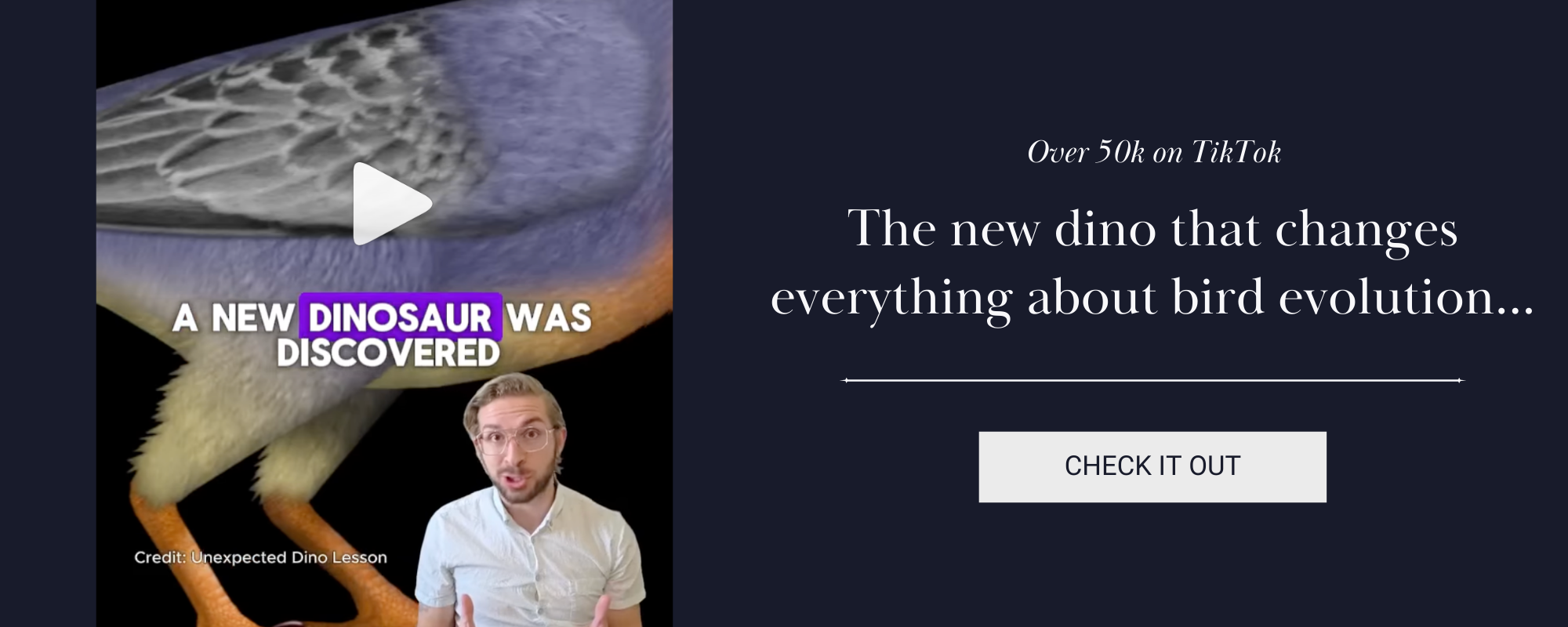
A new dinosaur was discovered and it had two fingers like T. rex! Duonychus is a Therizinosaur that lived in Mongolia 96 million years ago. This 10 foot (3 meter) long Therizinosaur had a feathery coat, a long neck, and a toothless beak. But what makes Duonychus so unique is that it’s the only Therizinosaur to have two claws on each finger. These claws were unlike those T. rex in that they reached over a foot (30 cm) in length. While these claws may have looked imposing, Duonychus wouldn’t have used them to fight off other dinosaurs. Instead, it was a gentle giant who used these claws to hook onto tree branches and pull them down for easy eating.
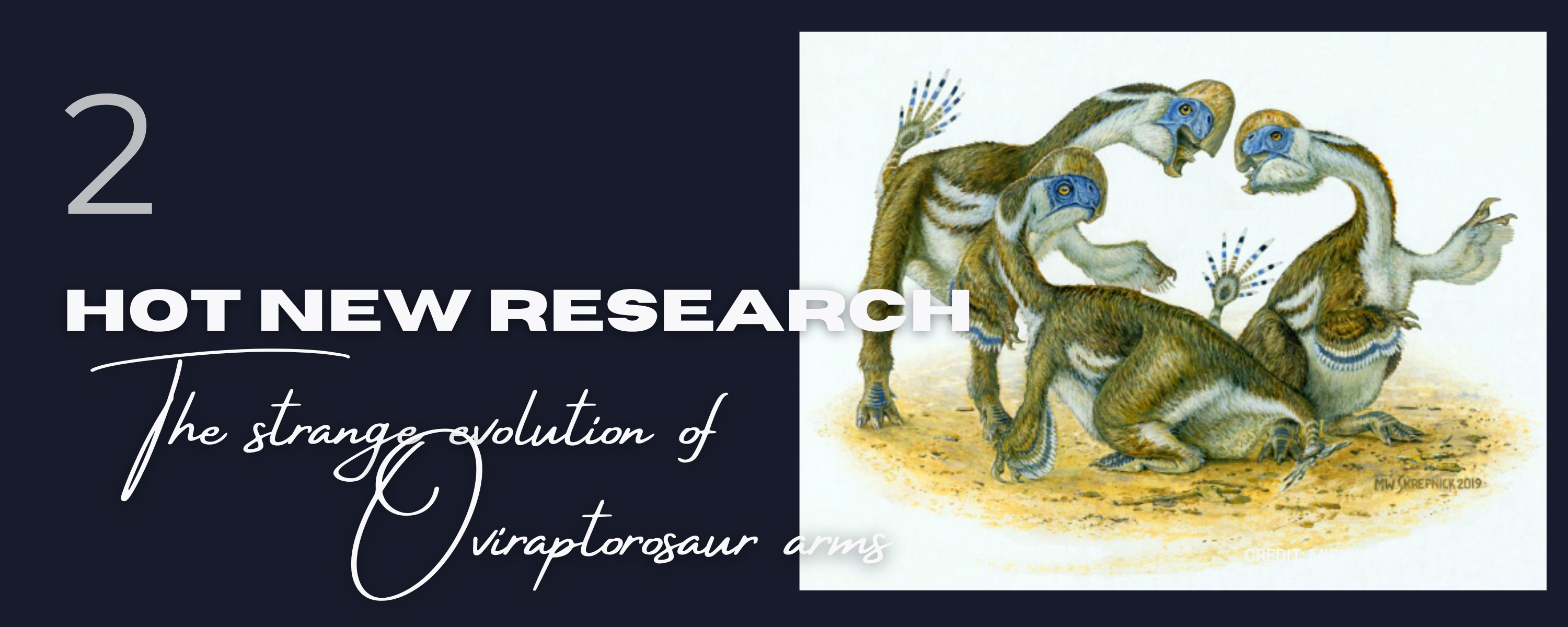
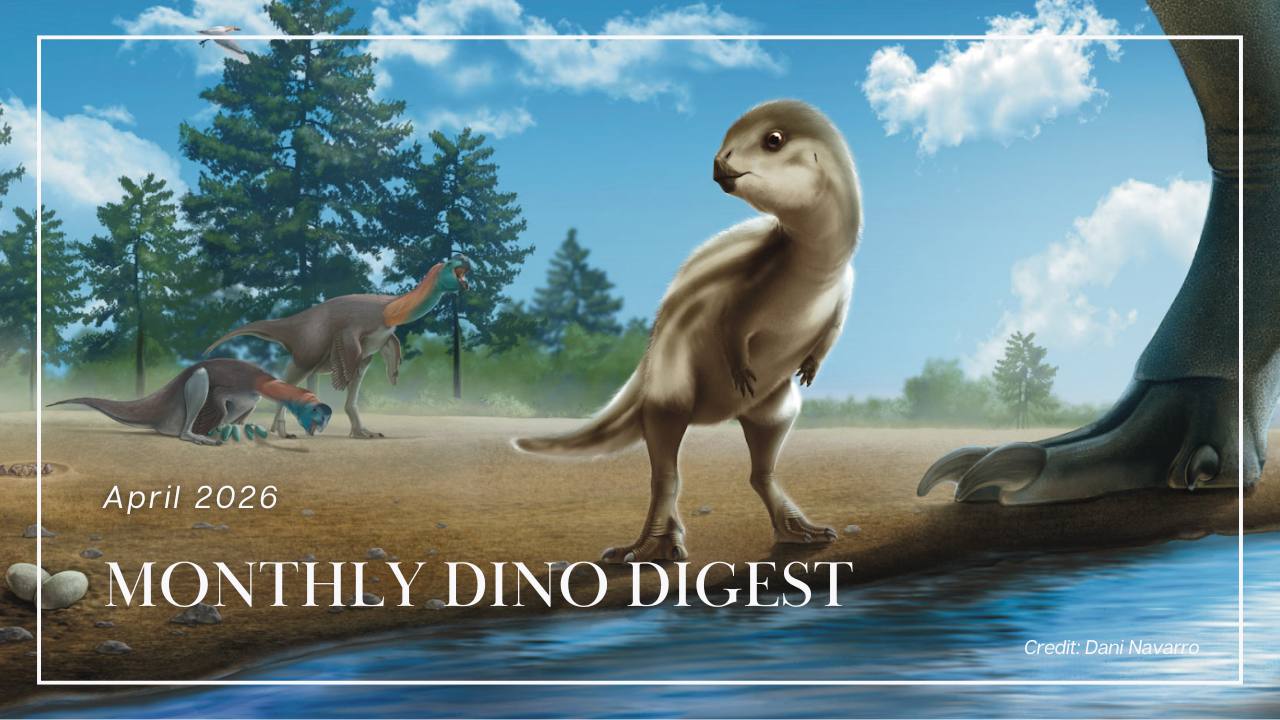
One of the strangest evolutionary phenomenons was just discovered in Oviraptor arms! Usually when an animal evolves smaller arms, its fingers shrink in proportion to those arms and they lose fingers. T. rex is a perfect example of this concept of shrinking arms and fingers. However, PhD student Milly Mead found that is not always the case. She and her team observed that Oviraptorosaurs who shorten their arms don’t always lose fingers. In fact, during the Late Cretaceous, East Asian Oviraptorosaurs went through this huge biodiversity boom and developed an assortment of arms that you wouldn’t expect. And what’s even more puzzling is that the reason why Oviraptorosaurs evolve this way is still uncertain, so only time will tell!
Milly Mead actually presented this research on Daily Dino Direct and answered some of my questions. Click here if you want to hear more about this research directly from Milly through her masterclass lecture, available only in the Daily Dino Direct Cretaceous Tier. Btw... did you know you can get a trial for just $3 right now using this link!?
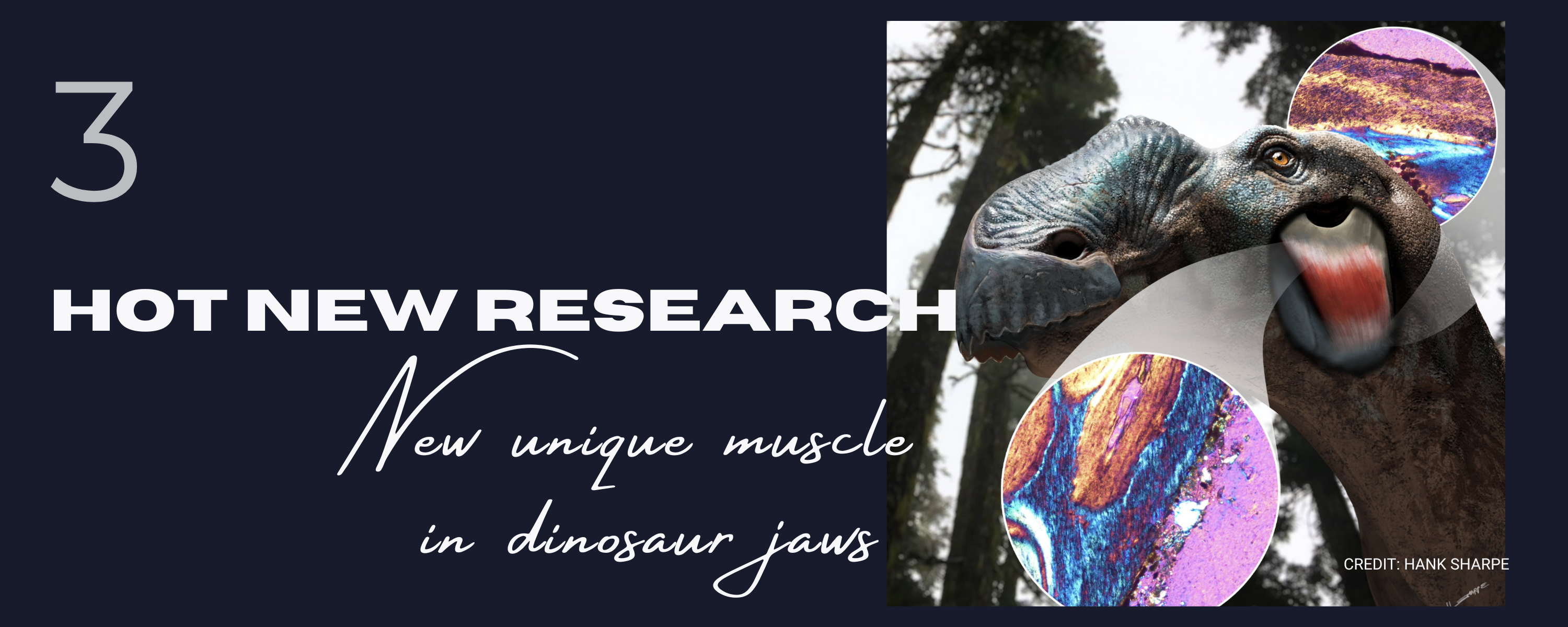
Our understanding of dinosaurs has completely changed with this new discovery! By comparing the muscles of birds and crocodiles, we can get a pretty good idea of what the muscles of dinosaurs would have been like. However, one team of researchers looked at the unusual shapes of cheek bones to better understand the muscles of dinosaur jaws. By looking at the bones of several different species of dinosaurs and by cutting open these bones to look at their microscopic structures, they realized something extraordinary. Dinosaurs had a unique muscle that connected the cheeks to the lower jaw, now called the “exoparia” muscle. This muscle would have stabilized the jaws of many dinosaurs; it was especially large in herbivorous dinosaurs that chewed their food.

A new fossil from Morocco has revealed the origin of a whole lineage of herbivorous dinosaurs! This new leg bone fossil was found to belong to a group of dinosaurs called Cerapodans. This group includes iconic dinosaurs like Triceratops, Pachycephalosaurus, Parasaurolophus, and Edmontosaurus. Even though these dinosaurs achieved a global distribution before the Cretaceous extinction, their origination has always been mysterious. Some researchers hypothesized that they originated somewhere in Africa and this fossil finally provides support for that hypothesis. Morocco during the Middle Jurassic produced many strange dinosaurs so it seems some unique evolutionary pressures gave rise to these iconic dinosaurs!

Even though birds are dinosaurs, they are quite different from what we would consider a dinosaur! Their skull is especially unique because there are many parts of the skull that are actually flexible, which helps with feeding. But why did birds evolve a flexible skull? One team examined many bird skulls and found that flexible skulls have a complicated history. As birds began to rely more on flight their brain size increased, and thus their braincase grew. To compensate for this restructuring of the skull, many jaw muscles had to shrink and move. But at the same time, the bones of the beak and palate developed joints which then made bird skulls flexible.


—
Q: Can you start a family and still continue in your career as a paleontologist?
A: Yes! It is 100% possible if you are willing to give it your all! Many people are married and have families and are well respected paleontologists. One of which was my advisor! But I will say, being a grad student doesn't pay much and you need to be flexible as far as being able to move. But you can always make extra money in different ways, you just need to be creative and have an entrepreneurial drive, which is totally different from being a paleontologist but it's an extremely valuable skill to have.
Q: Can I find dinosaurs in my backyard?
A: Unfortunately it’s very unlikely that you would find fossils in your backyard. If your backyard is flat and is filled with grass or other plants, then the soil and plant roots are breaking down the very delicate fossils underneath the surface. Although this is even if there are fossils underneath your lawn. The only way to really know if there are fossils nearby is to see them eroding out of the ground; you will usually see crumbling bones coming from a rock layer within a hill or a dried up river bed. Because fossils are really just rocks that are in the shape of bones, there’s no radar-like technology that can scan for bones underneath the ground. Most dinosaur fossils are often found in badlands, like those in the American Midwest or Southwest.
Q: How many bites does it take for a t rex to break his teeth?
A: T. rex teeth were some of the toughest teeth of any dinosaur thanks to how thick they were so they very rarely broke! But T. rex and other predatory dinosaurs replaced their teeth every one to two years. That way they always had fresh and strong teeth available. So it would probably take up to two years of biting before a T. rex tooth fell out!




THANKS FOR BEING A PART OF THE DINO GANG,


Responses