Hi Dino Gang,
This month has been a wild mix of cozy, chaotic, and completely surreal in the best way. On the cozy side: Thanksgiving was exactly what I needed. After months of book launch prep, filming, and research, finally slowing down with family felt like a deep breath. We had two types of turkey (because you can’t get enough): One was a deep fried turkey and the other was Air fried.
Plus a ridiculous number of sides. It turned into one of those classic “we definitely made too much food, but no one is complaining” Thanksgivings. We caught up, laughed, and for the first time in a while, I actually unplugged from the chaos of work.
And then the surreal part happened:
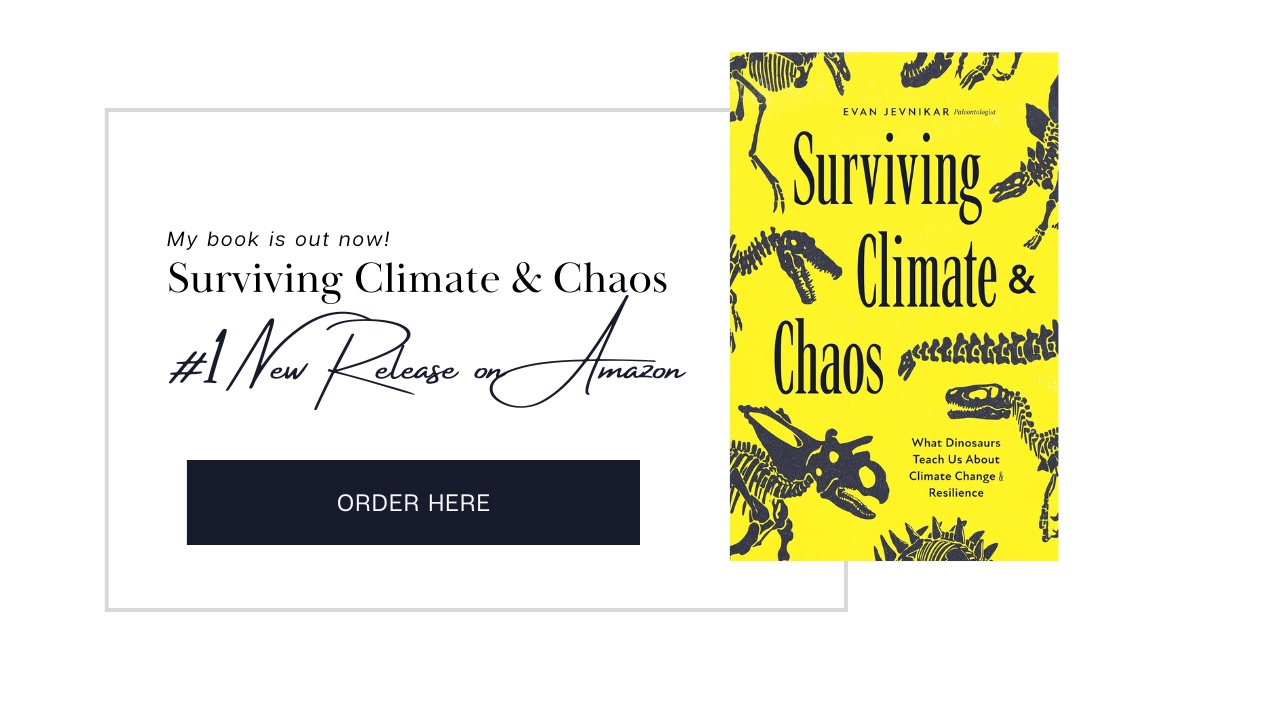
My book, Surviving Climate and Chaos, officially released on December 2 and it hit #1 New Release on Amazon!
I’m still wrapping my head around that!
What’s been the most meaningful to me are the messages from readers saying how much they loved it. Most people think of climate change as something that’s only happening right now. But if you zoom out, you realize Dinosaurs lived through multiple intense climate swings. Volcanoes, shifting continents, and even meteor impacts reshaped their world. Those changes didn’t just wipe things out - they influenced their evolution.
In the book, we walk through 180 million years of dinosaur history and look at how climate crises start, reshape ecosystems, and eventually give way to something new. Yes, some species vanish. But again and again, the fossil record shows us that life is resilient and finds ways to survive even the most stressful conditions.
For me, that’s one of the most hopeful messages we can take into our own future.
If you want to see climate change through dinosaur eyes and understand what their story can teach us about ours then you can grab the book here:
In this month’s Dino Digest, you’ll find:
• How dinosaur vomit revealed a new species
• A dinosaur that rewrites bird evolution
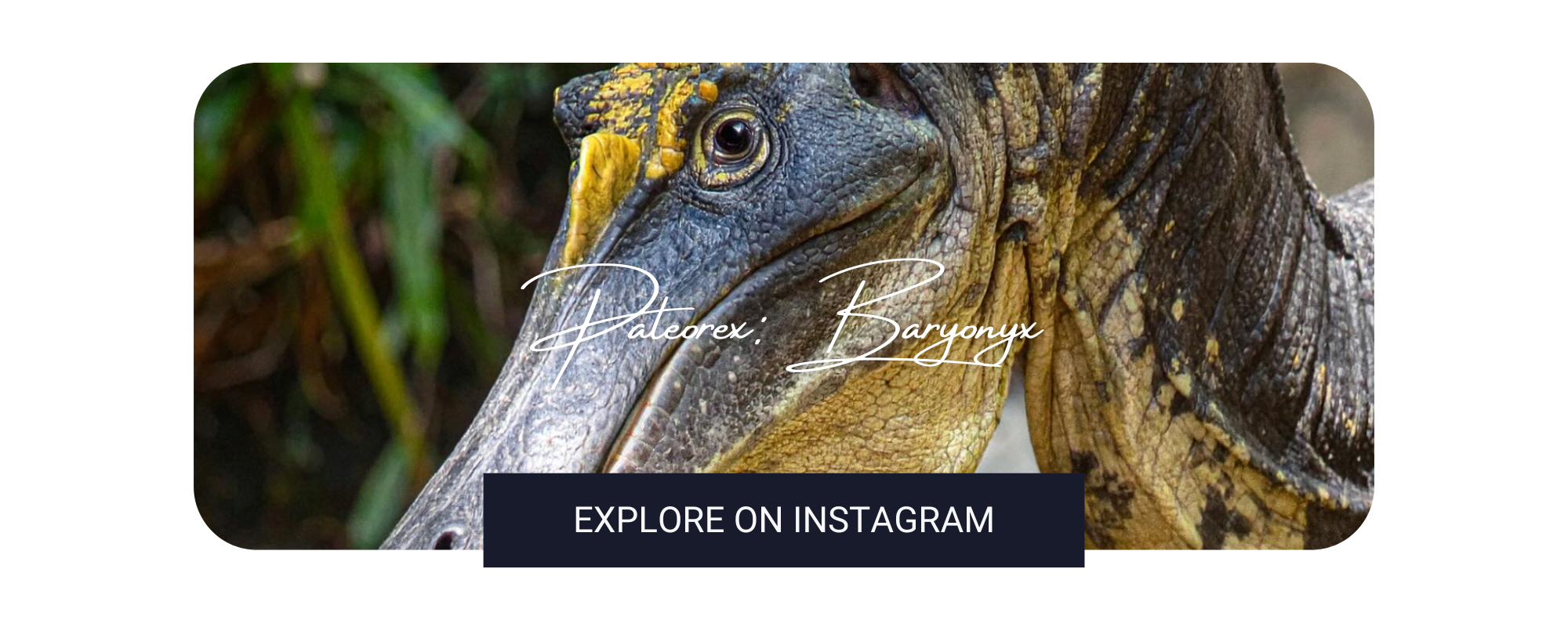
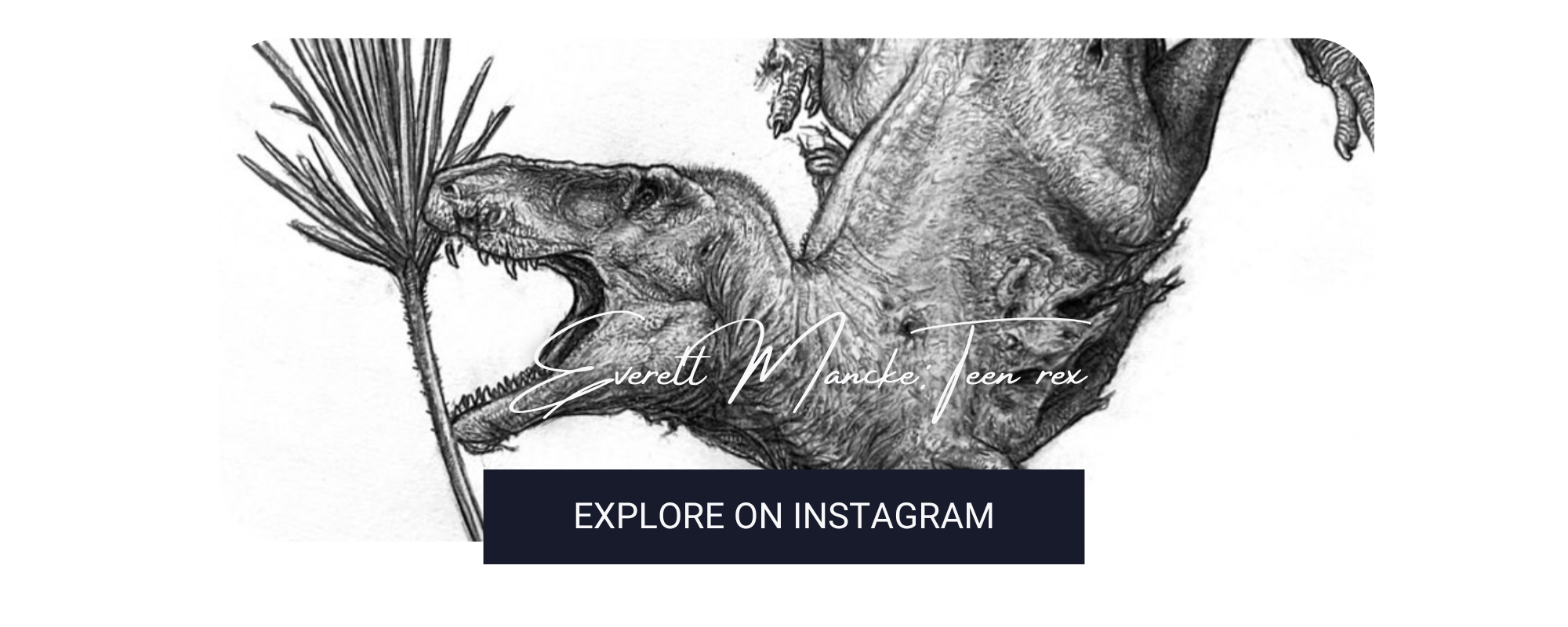
• This month’s paleo artist spotlight (the pieces are unreal)
• And some thought provoking questions from the community
So scroll on, because if you thought you knew how dinosaurs lived, adapted, and evolved… think again. 👇

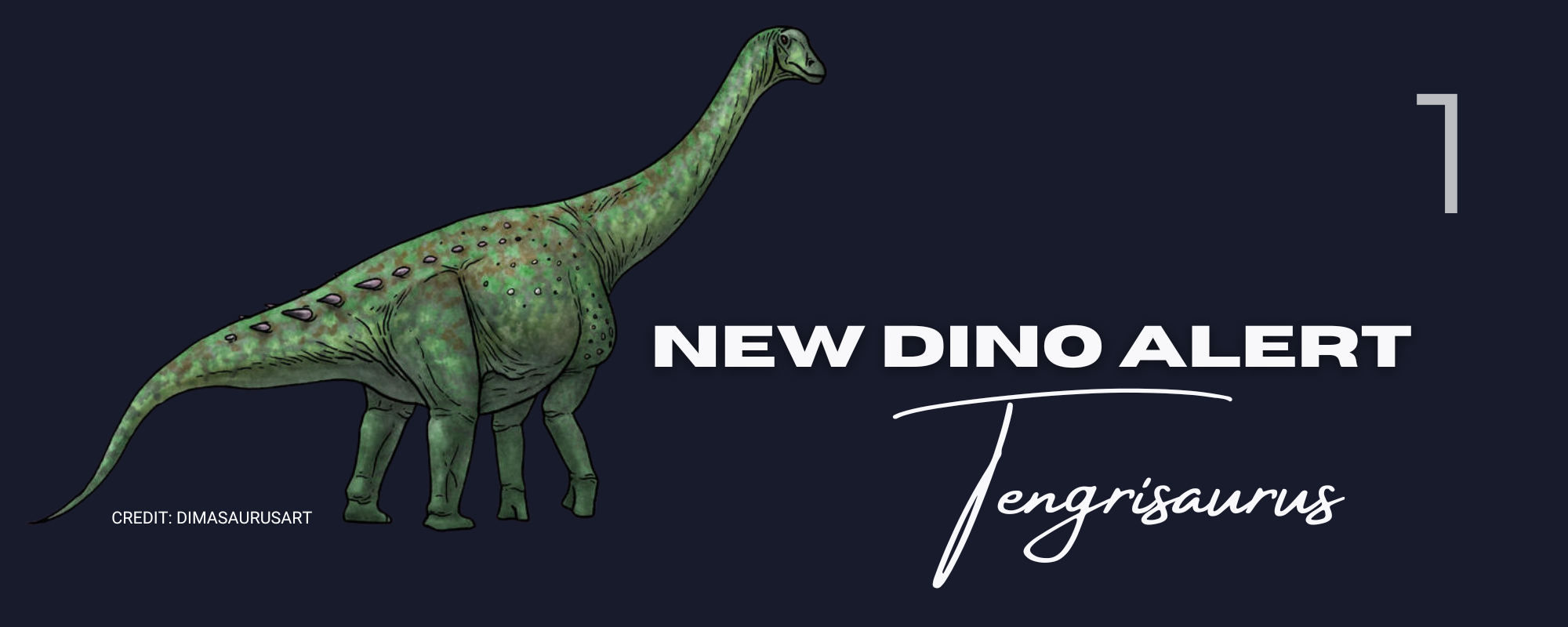
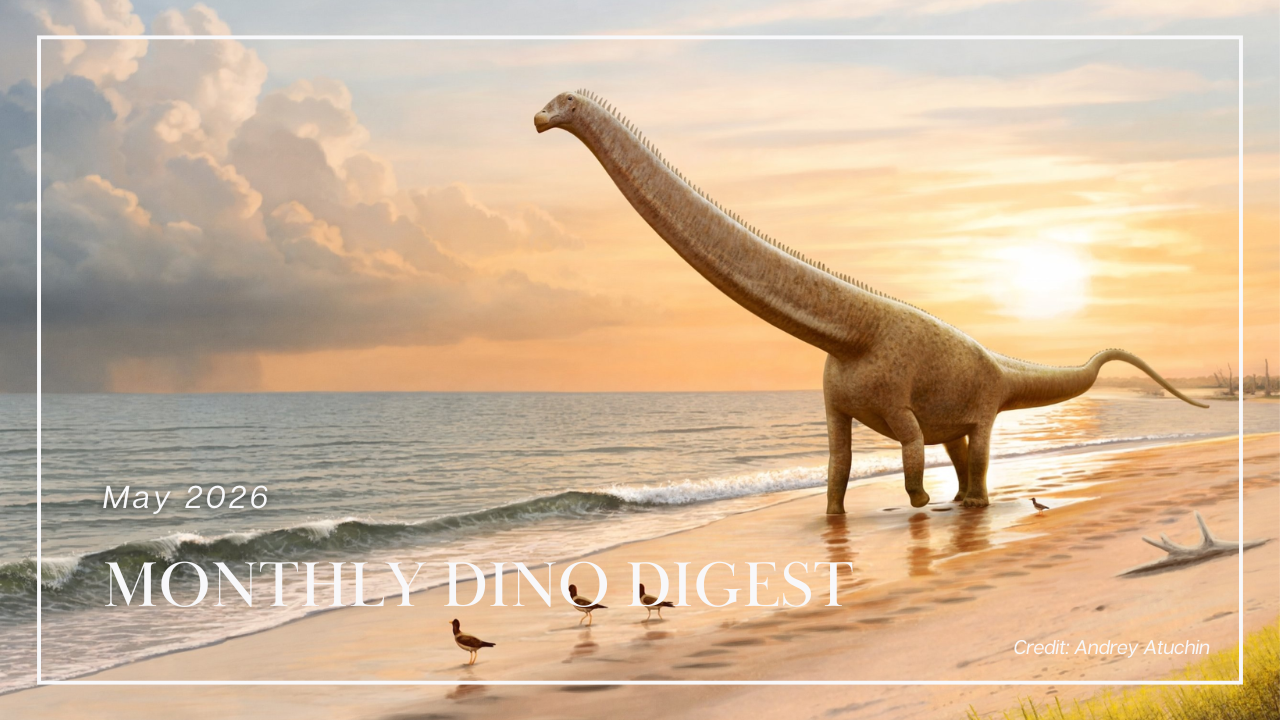
A new dinosaur was discovered and it completely changed the evolution of long-necked dinosaurs! Tengrisaurus is a new Sauropod that lived in Russia about 134 million years ago. This dinosaur was specifically a Titanosaur, which were the biggest and most successful Sauropods that dominated the globe during the Cretaceous. The fact that Tengrisaurus was found in Russia completely changes where we thought Titanosaurs originated. While they were a global group, Titanosaurs were primarily found in South America with some of the oldest species being discovered there. However, Tengrisaurus lived in Russia roughly 10 million years earlier than even the oldest Titanosaurs. This suggests that ancient Russia was preferable to early Titanosaurs and that they were able to migrate across the entire globe in order to get to South America.
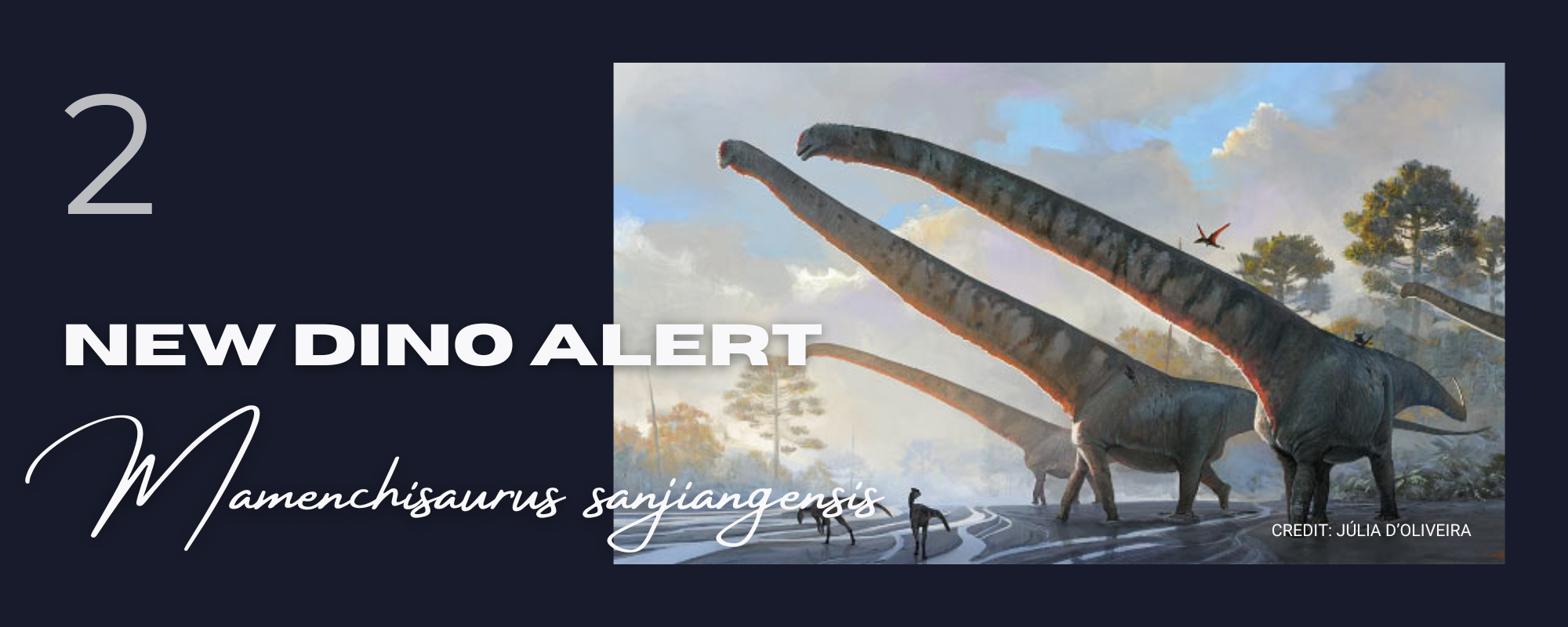
A new dinosaur was discovered and it absolutely dominated in the Jurassic! Another new species of Mamenchisaurus sanjiangensis is a new Sauropod that lived in China 158 million years ago. This is now the seventh species of the genus Mamenchisaurus to be discovered, making it one of the most common and successful plant-eating dinosaurs in the Late Jurassic of Asia. It’s no wonder why these dinosaurs were so successful; Mamenchisaurus had one of the longest necks of any Sauropod ever. While Sauropods are known for their long necks, these dinosaurs had necks that could reach up to 80 feet long and made up nearly 50% of their body length! This meant there was virtually nothing Mamenchisaurus couldn’t eat. Its long neck helped it reach the tallest trees and allowed it to sweep over huge patches of ferns and horsetails without ever having to walk.
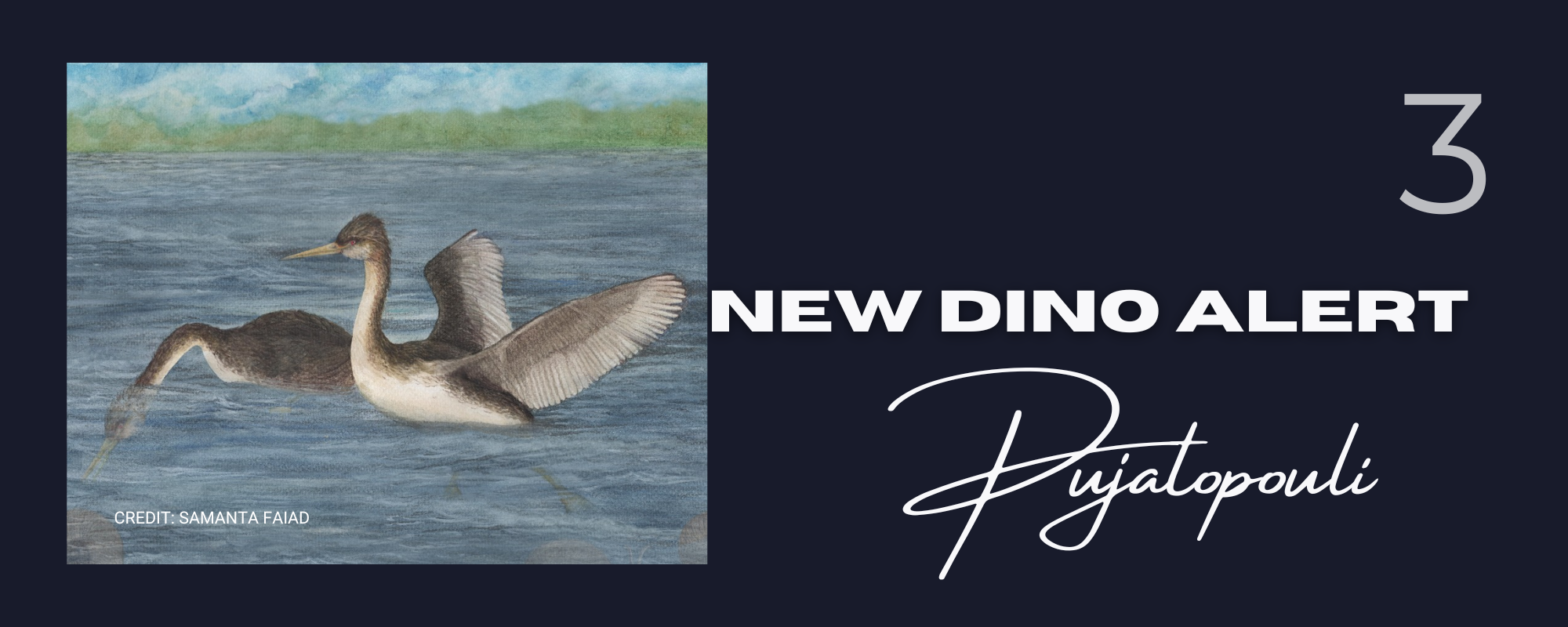
A new dinosaur was discovered that reveals how common birds were before the Cretaceous mass extinction! Pujatopouli is a new bird that lived in Antarctica 66 million years ago. This bird was tiny; It’s skull was so small it could fit within the palm of your hand. What makes Pujatopouli so interesting is that it is not just some prehistoric bird, it was one of the oldest ancestors of Loons, Penguins, and Pelicans. Pujatopouli would have been perfectly adapted for living on ancient coasts eating fish and possibly even diving. What’s more, it lived alongside Vegavis, one of the oldest ancestors of ducks. This reveals that modern birds were very much present alongside dinosaurs, surprisingly diverse, and highly advanced for their time.
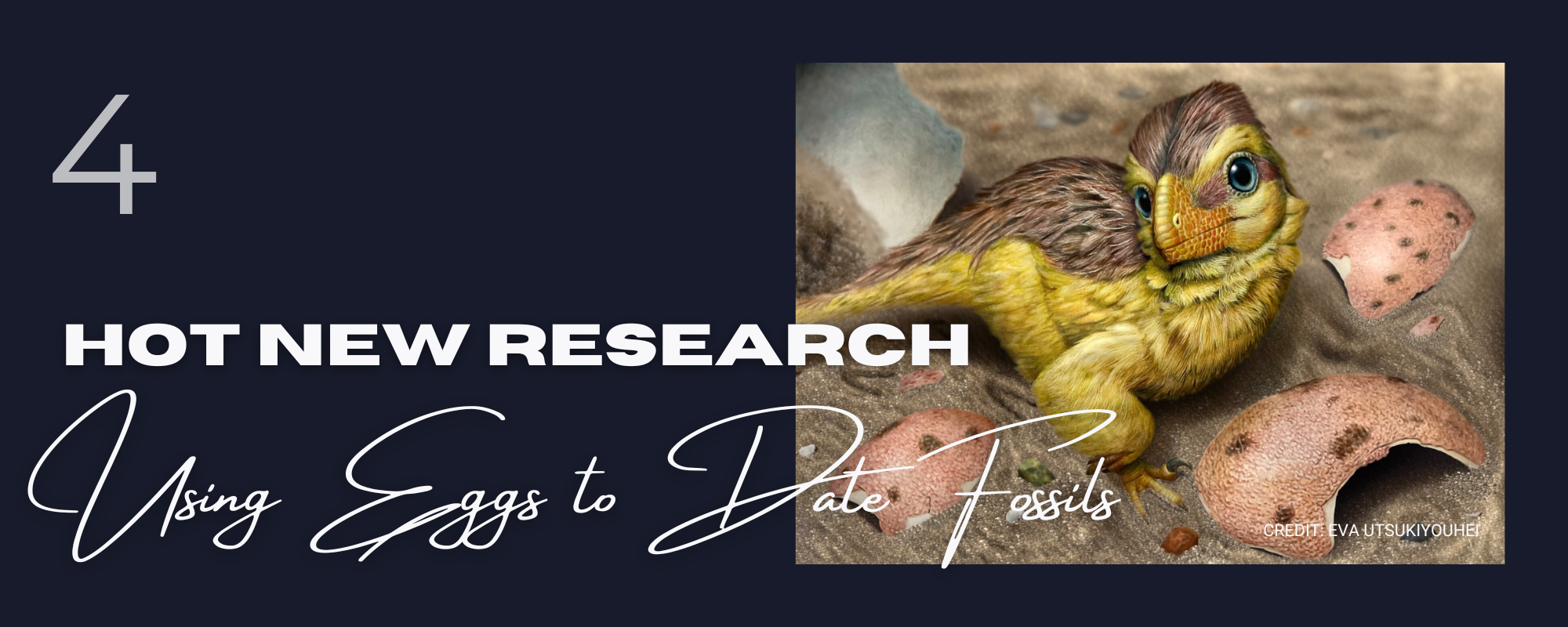
It has never been easier to know how old a fossil layer is thanks to this new study! Figuring out the exact age of rock layers is often complex, intensive, and rare because of the technology needed and the exact minerals required. The most accurate method, for example, requires studying the mineral Zircon, which only forms from volcanic eruptions. However, a research team tested to see if you could use something more common to determine geologic ages: dinosaur eggs. They found that the chemical composition of dinosaur eggs allows for extremely accurate dating of rock layers that is comparable to dating volcanic ash. This method is so insightful that it actually helped determine the age of rock layers in Mongolia that have remained unknown for decades. Given that all dinosaurs lay eggs, this opens up the possibility to know the exact age of just about every dinosaur bearing layer.
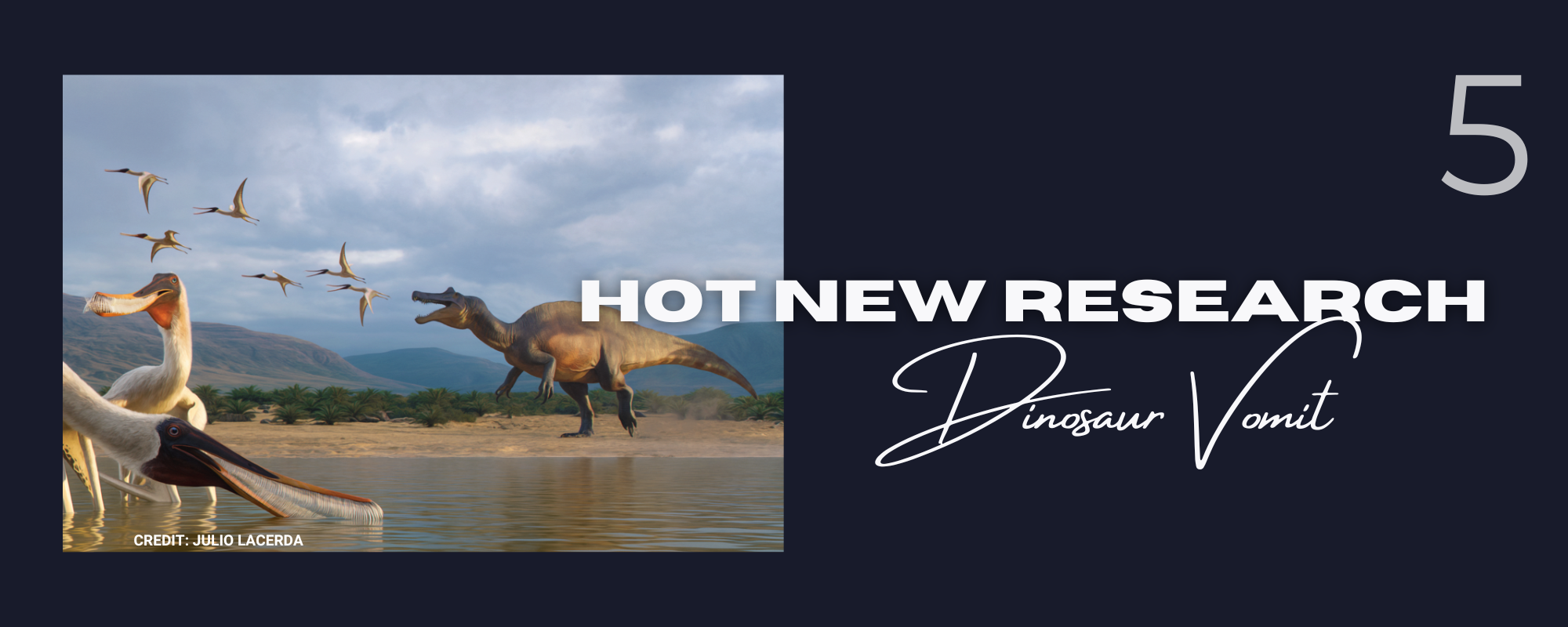
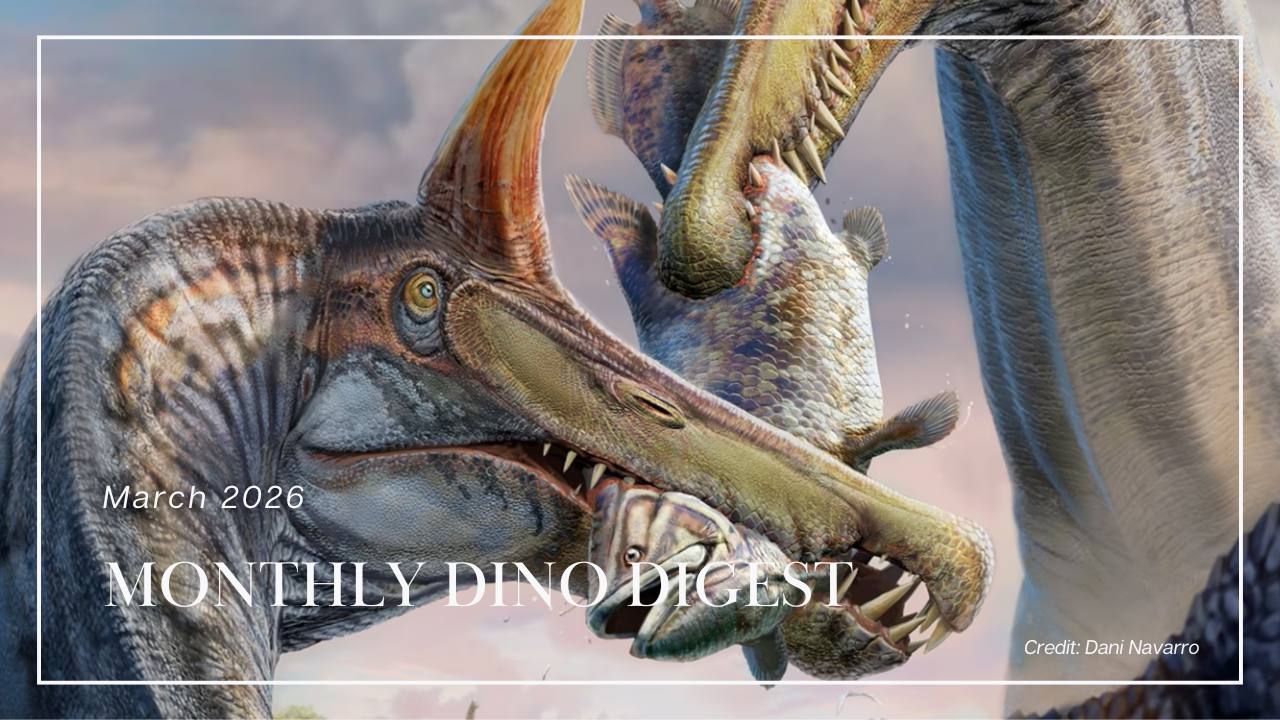
One dinosaur’s throw up is another paleontologist's treasure! A brand new species of Brazilian pterosaur was discovered named Bakiribu and it lived roughly 113 million years ago. Bakiribu is not a dinosaur, but it was preserved in a fossilized pile of vomit, called a regurgitalite. No other predator besides a dinosaur could have left a pile of barf this big, which begs the question: What type of dinosaur ate and threw up Bakiribu? Bakiribu had comb-like teeth that would have helped it filter feed within rivers and streams. Brazilian rivers and streams were notorious for being filled with Spinosaurs who were mostly known for eating fish. Yet many other pterosaurs in the region have been found with bite marks from Spinosaurs. Putting this all together suggests that Spinosaurs preyed on both fish and filter-feeding pterosaurs like Bakiribu.


—
Q: Why do some people think Spinosaurus can swim while others say that it couldn’t?
A: Some people think that Spinosaurus couldn’t swim because its spine would have affected its buoyancy and center of mass when it was swimming. However, I’m in the camp that it could swim because it had a massive paddle tail, its bones were dense and buoyant like those of transitional whales, we have evidence it ate deep sea fish like Ceolocanths and Sturgeons, and its skull convergently evolved to be like marine reptiles like Mosasaurs and Pliosaurs. To me, the direct evidence that it could swim seems more compelling than the indirect evidence that it couldn’t.
Q: What plants did Triceratops eat?
A: We don’t know specifically what plants it ate since we haven’t found any stomach contents from Triceratops. However, it had what’s called a tooth battery, which was essentially hundreds of molar-shaped teeth stacked on top of each other like a wall of legos. These tough teeth and their special structure in the battery meant it could crush and shear relatively tough plant material. It likely would have eaten leaves from conifers or leaves from tougher flowering shrubs.
Q: What is a good book to start building a comprehensive understanding of paleontology?
A: I have a ton of books on my website that are perfect for learning about dinosaurs regardless of how much you know! My new book Surviving Climate and Chaos talks about the humble origins of dinosaurs all the way up to their extinction so it is pretty expansive! But some other good books to read would probably be either Rise and Fall of the Dinosaurs by Steve Brusatte or Uncovering Dinosaur Behavior by David Hone.



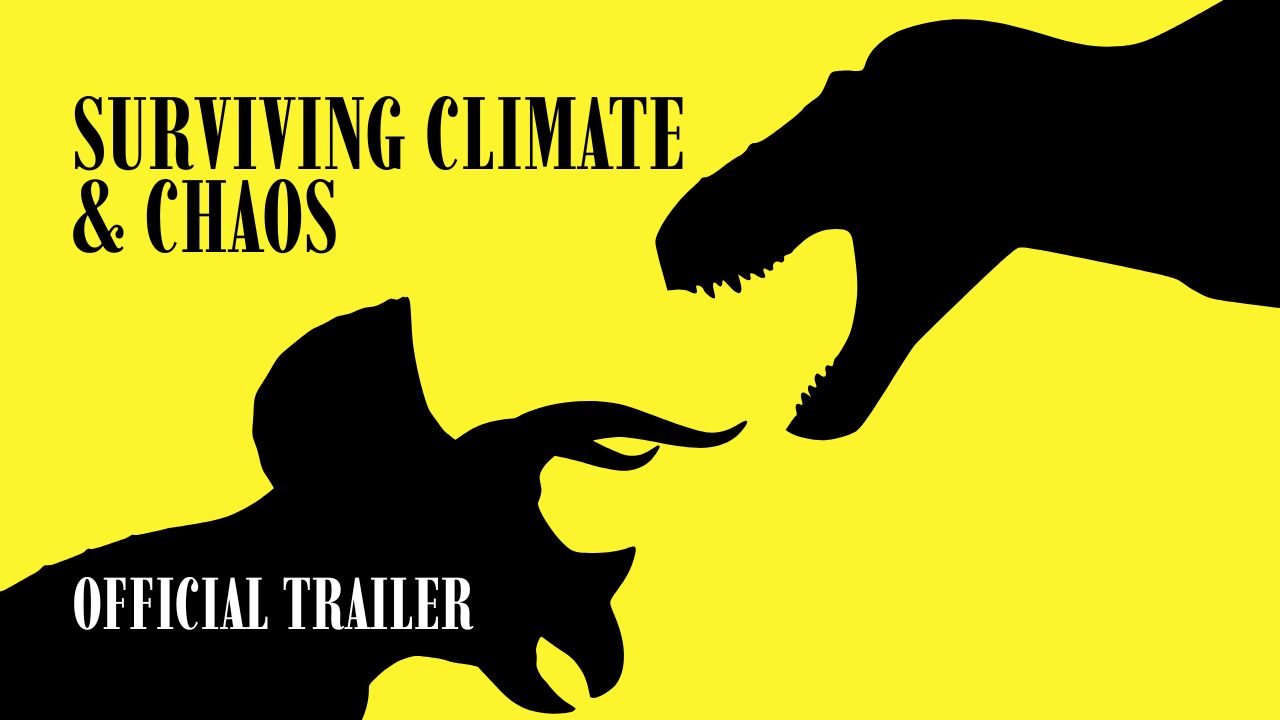
Official Trailer of Surviving Climate and Chaos
Watch the full video now 👆🏻


THANKS FOR BEING A PART OF THE DINO GANG,


Responses