
Hi Dino Gang,
Happy February! I know January hit hard for a lot of you—it’s been a whirlwind for me too. So I hope Daily Dino Guy can be a place to escape, just as it has been for me. And what better way to start off this month than with some jaw-dropping new dino discoveries?
Scientists have made some groundbreaking finds that could change everything we thought we knew about dinosaurs.
Here's what I'm diving into in this newsletter ⤵️
- A newly discovered ancestor of long-necked dinosaurs found in Wyoming that could rewrite what we thought about dinosaur origins.
- The fastest dinosaur ever discovered—running at speeds that put Usain Bolt to shame 🤯
- A giant carnivore mistaken for another species for nearly a century, finally identified thanks to old photos from WWII.
- A dinosaur with crazy-long hands that may have moved like a prehistoric sloth.
- And just wait until you read what we've just learned about a dinosaur thought to be a fierce predator… but it turns out it may have been an omnivore all along!😱
Now, before we jump in, if you missed out on the first drop of the Roar-schach Collection merch, I have some news for you—we heard how bummed some of you were in the DMs. So, we restocked a small number of items, but this is truly the last run. If you missed it last time, now’s your chance before they’re gone for good.
GET 'EM BEFORE THEY'RE GONE
Now, let's dive into the full newsletter ⤵️

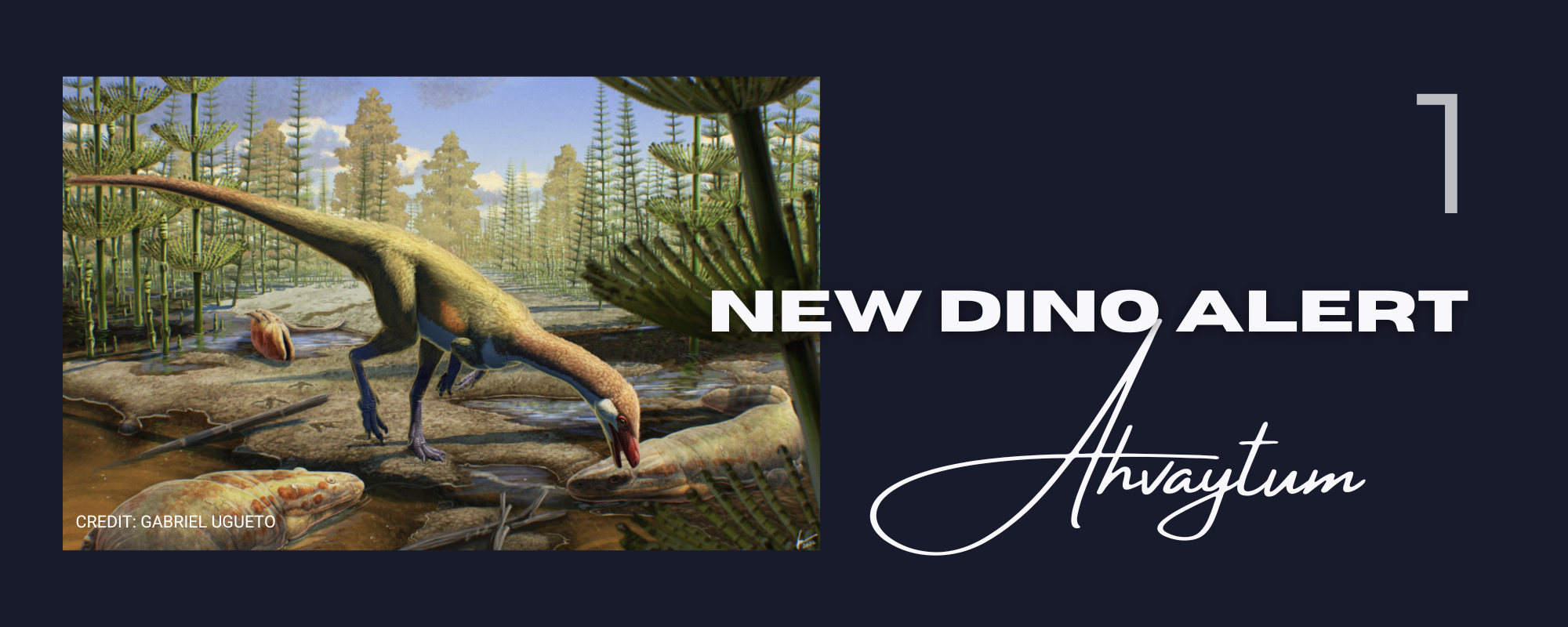
A new dinosaur was discovered and it was one of the oldest dinosaurs to exist! Ahvaytum was one of the earliest relatives of long-necked dinosaurs (Sauropodamorph) and lived in Wyoming, United States 230 million years ago. Even though long-necked dinosaurs were plant eaters, this tiny ancestor had sharp teeth, suggesting it ate plants and smaller animals. This dinosaur is so important because it is the earliest dinosaur to have been found in North America. Paleontologists have believed that dinosaurs originated in Southern Pangea during the Triassic. Today, southern Pangea is made up of countries like Argentina and South Africa. But given that Ahvaytum was found in Wyoming, which would be the Pangean equator, it suggests that early dinosaurs did not exclusively live in Southern Pangea.
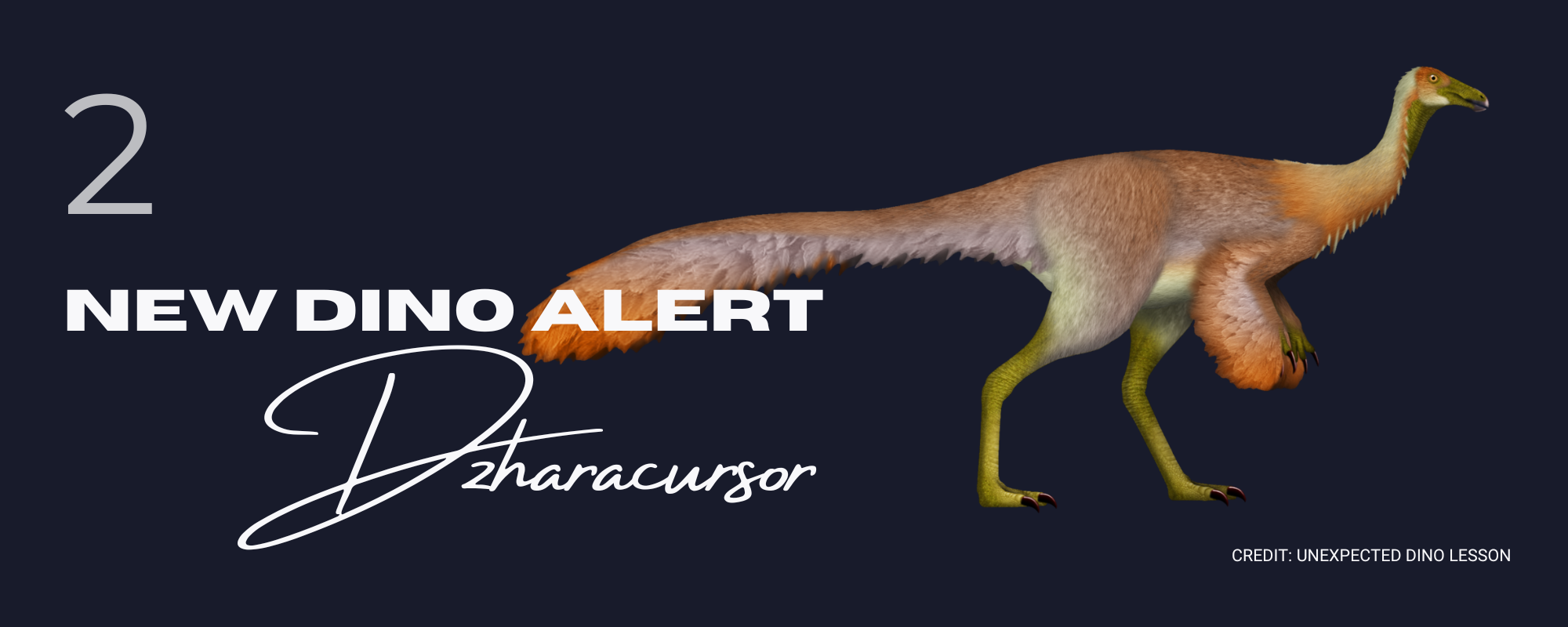
A new dinosaur was discovered and it was one of the fastest dinosaurs to ever live! Dzharacursor is a new feathered dinosaur that lived in Uzbekistan 90 million years ago. It was specifically an ornithomimid, or “Ostrich Mimic”, meaning it had long legs, a completely feathered body, and a beak. Ornithomimids were the fastest dinosaurs to ever exist. Dzharacursor in particular likely could run up to 38 mph or 61 km/h, making it easily the fastest dinosaur in prehistoric Uzbekistan. This speed was crucial for its survival since it lived along two deadly predators. One being the gigantic apex predator Ulughbegsaurus, and the other being the smaller and faster Timurlengia, a relative of T. rex.
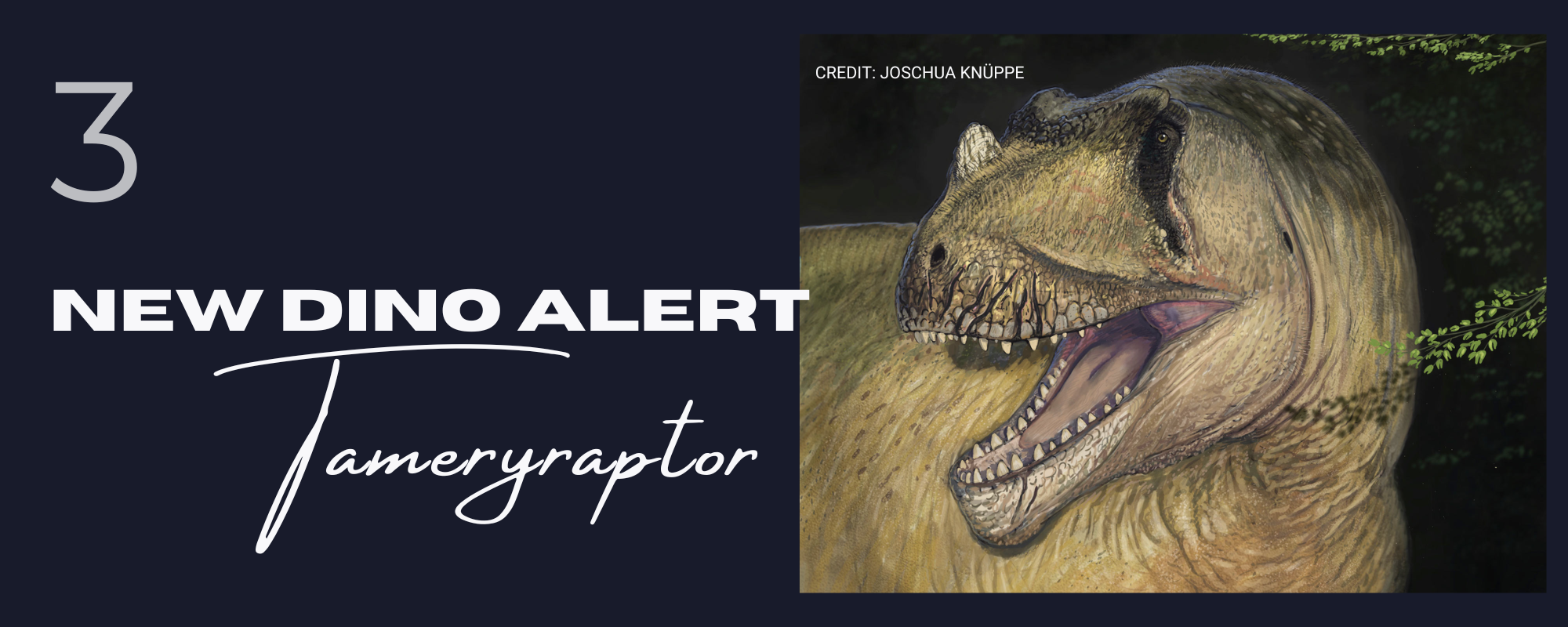
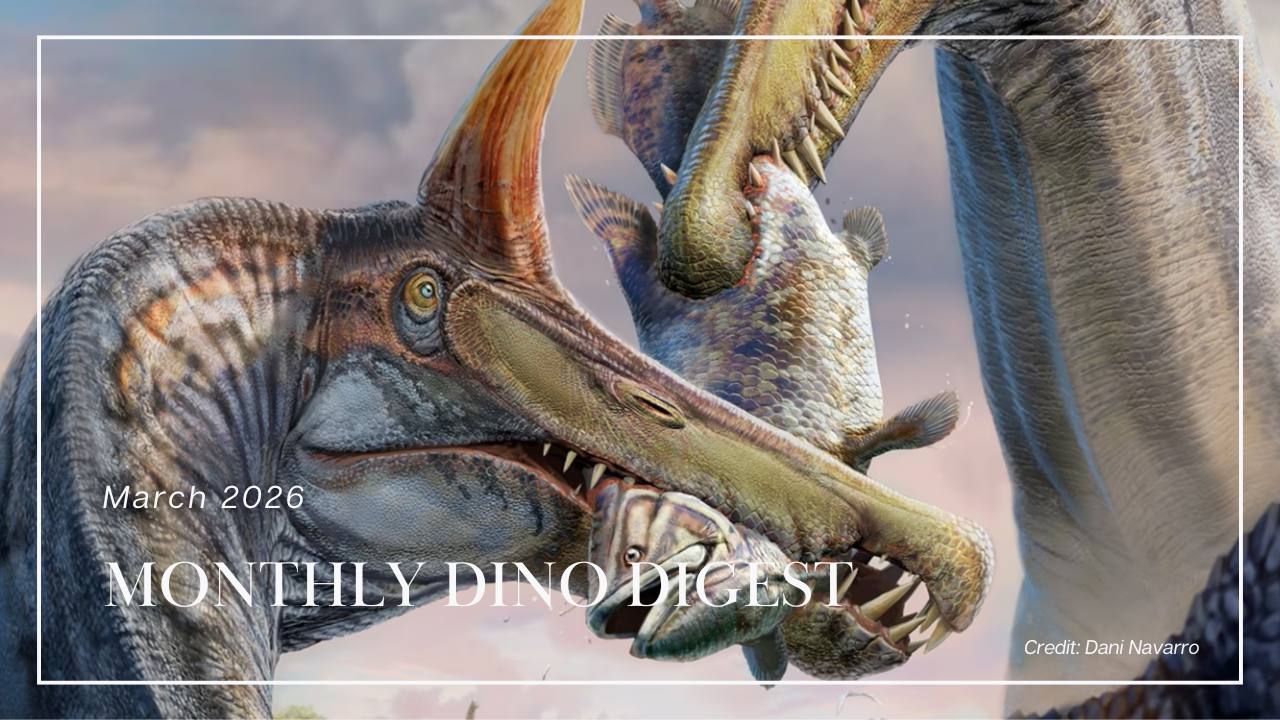
A new dinosaur was discovered and it’s been hiding in front of us this whole time! Tameryraptor is a carnivorous dinosaur that lived in Egypt 100 million years ago. This giant predator was specifically a “Shark-toothed” predator (Carcharodontosaurid), meaning it had large yet thin blade-like teeth that were serrated on both sides. What’s so interesting about this dinosaur is that it was mistaken for another dinosaur this entire time. The fossils of Tameryraptor were found by Ernst Stromer before World War II and were thought to belong to Carcharodontosaurus based on the unique teeth and general shape of the skull. The original fossil was destroyed during a bombing raid on Munich, thus leaving only old photographs for study. It wasn’t until paleontologists took a closer look at these photographs that they realized that the skull was slightly different from Carcharodontosaurus and even featured a horn on the nose. Therefore, they described the new species, Tameryraptor, based on these photographs.
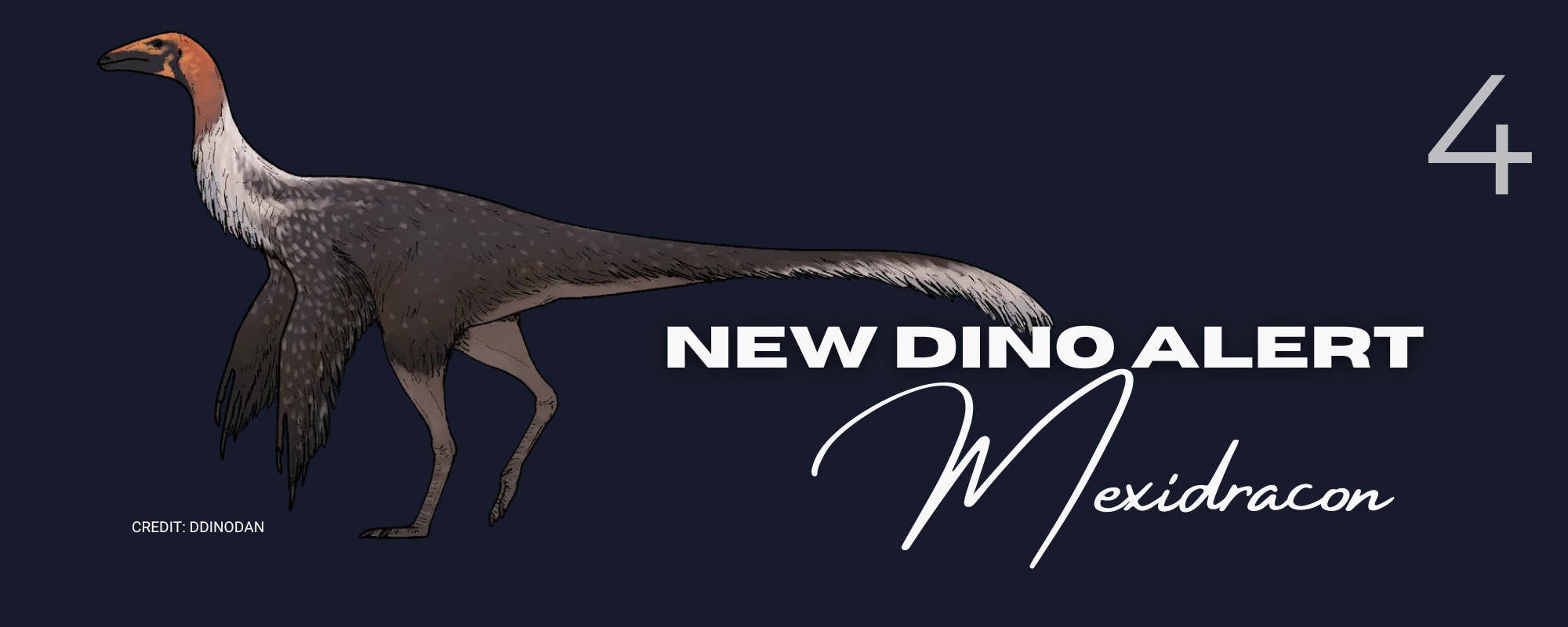
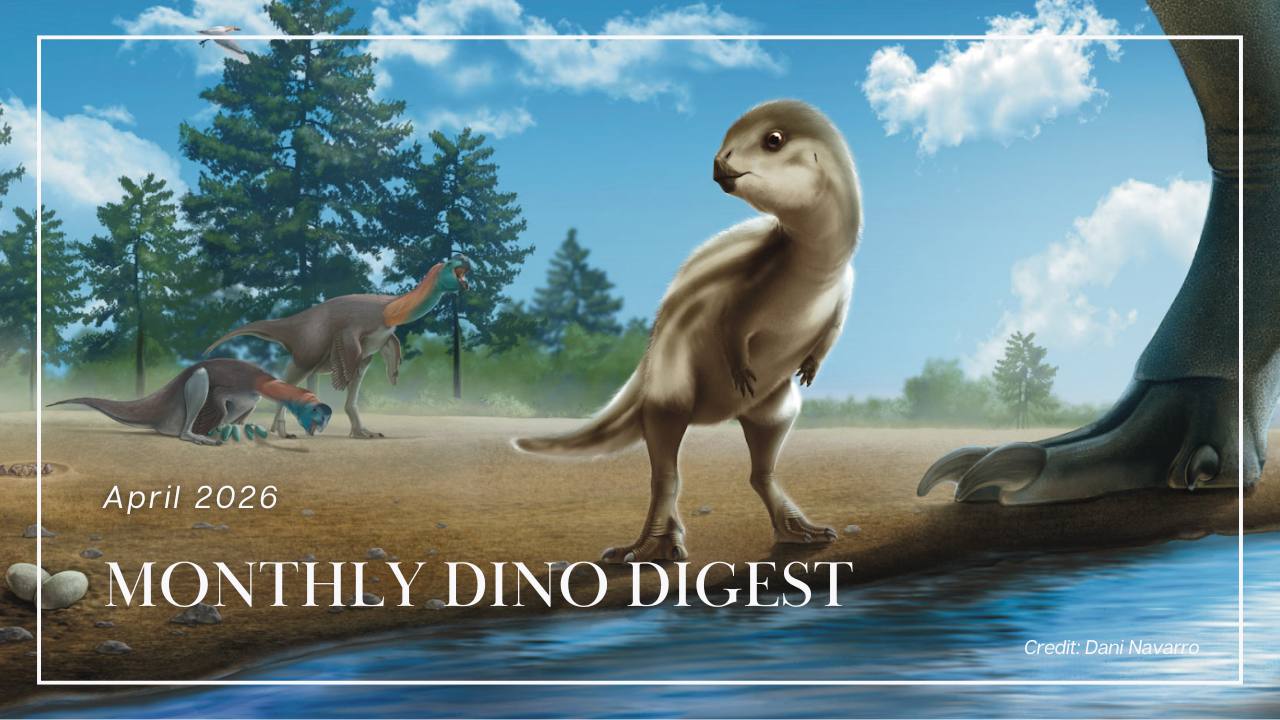
A new dinosaur was discovered and it had the craziest hands! Mexidracon is another new “Ostrich Mimic”, but this new species lived in Mexico 73 million years ago. It was relatively small, only standing a little taller than a German Shephard. Mexidracon is unique because it had unusually long hands. It’s hypothesized that these long hands may have helped it grab branches more easily, similar to modern day sloths. It’s also not the only dinosaur with weird hands in its environment; Paraxenisaurus was another long armed relative that likely also used its arms to grab hard to reach plants. Based on its long arms, the authors think that it was probably an awkward runner and a rather slow Ornithomimid.
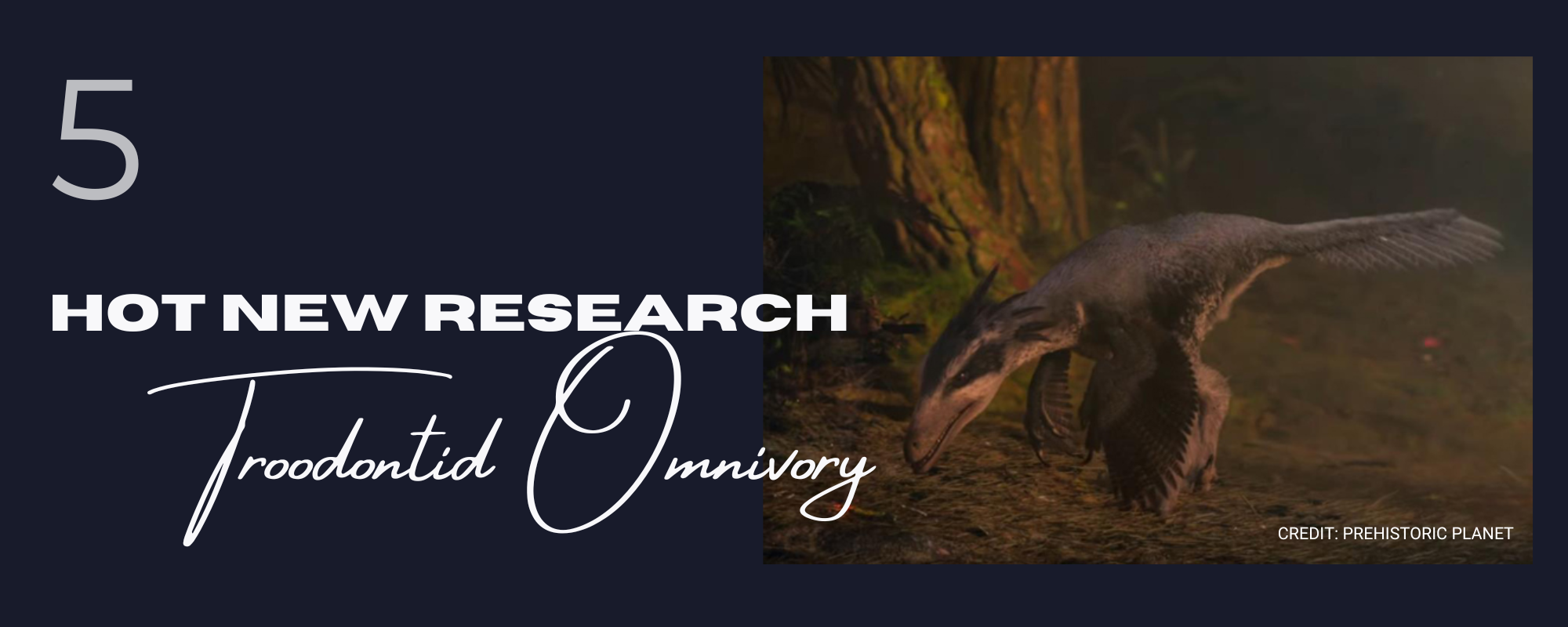
You will never look at these dinosaurs the same! Troodontids have always been thought to be predatory dinosaurs for a long list of reasons; They’re relatives of dinosaurs like Velociraptor (Dromaeosaurs), they had a curved foot claw, and they had sharp serrated teeth. In fact, an old colleague of mine, William Friemuth, even found pellets filled with mammal bones that were likely made by Troodontids. However, a new study from another old colleague of mine, Thomas Cullen, looked at the isotopic signature of Troodontid teeth to understand their diet. By looking at the chemical composition of their teeth, you can figure out how much of their diet consisted of meat or plants. This study found that Troodontids actually had an isotopic signature halfway between Dromaeosaurs and other plant eating dinosaurs. Meaning that they were omnivores, eating both small mammals and plants.
READ THE FULL PAPER


MONTHLY FAQ's
—
Q: When will it be possible to recreate dinosaurs?
A: I'd say within the next 20 years. There's been a lot of research today on bringing back Woolly Mammoths using frozen DNA. But with dinosaurs, it would be much different since DNA doesn’t preserve for that long. Instead we would have to reverse engineer bird DNA back into dinosaurs. There's already been experiments to show its possible! Researchers have turned off bird genes and turned on more ancestral dinosaur genes to give chicken embryos a bony tail in one experiment and teeth in another.
Q: What does a dinosaur sound like?
A: We don’t know what 99% of all dinosaurs sound like because the organs that make sound are usually soft tissue, making them very hard to fossilize. However there are two dinosaurs that we know the sound of: The first is Parasaurolophus. This dinosaur had a large hollow tube-shaped crest on its head that connected to its nostrils. By blowing air through this complicated tube, paleontologists were able to recreate the sound of this dinosaur and realized it made a deep honking sound, like a foghorn! The next one is Pinacosaurus, an armored dinosaur similar to Ankylosaurus. This dinosaur actually preserved a larynx, the organ that creates sound in animals. While we don’t know exactly the sound it made, we do know that it was shaped similar to the larynx of a bird, meaning that it would have made noises similar to a bird. It may not have sung, whistled, or chirped like sparrows or other songbirds, but instead hissed, grunted, and bellowed like Emus and ostriches
Q: Were the horns of Triceratops made of the same material as rhino horns?
A: Yes and no. The horns of Rhinos are exclusively made of Keratin, the thing that makes up our fingernails. If you looked at just the skull of a Rhino, you wouldn’t even know it had a horn! Triceratops did have horns made of bone. However, these horns would likely have been covered in Keratin as well, which would have made them longer and pointier. This is similar to goats, who also have bony horns covered in Keratin.


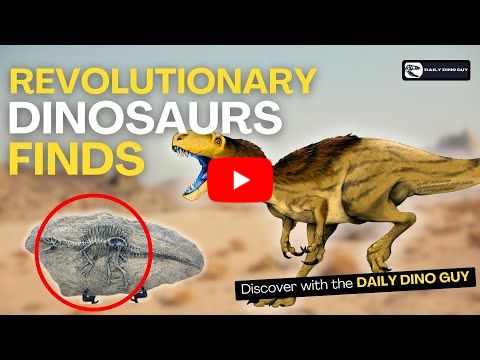
New dinosaur discoveries are changing everything we knew about these amazing prehistoric reptiles. In this video, we explore the latest paleontological finds, from never-before-seen species to secrets about the extinction of dinosaurs that could rewrite the history of our planet.
SUBSCRIBE ON YOUTUBE


THANKS FOR BEING A PART OF THE DINO GANG,






Responses