Hi Dino Gang,
Buckle up, this month’s research roundup is WILD. We're talking faster relatives of T. rex, tiny underdog dinosaurs living in the shadows of giants, and even the first gut contents ever found inside a Sauropod. Yeah, it's that kind of month.
We’ve got new species from Colorado to Mongolia and research that uncovers everything from dinosaur dance moves (yes, really) to what some of the largest land animals ever were actually eating. If you think you know Jurassic ecosystems... think again.
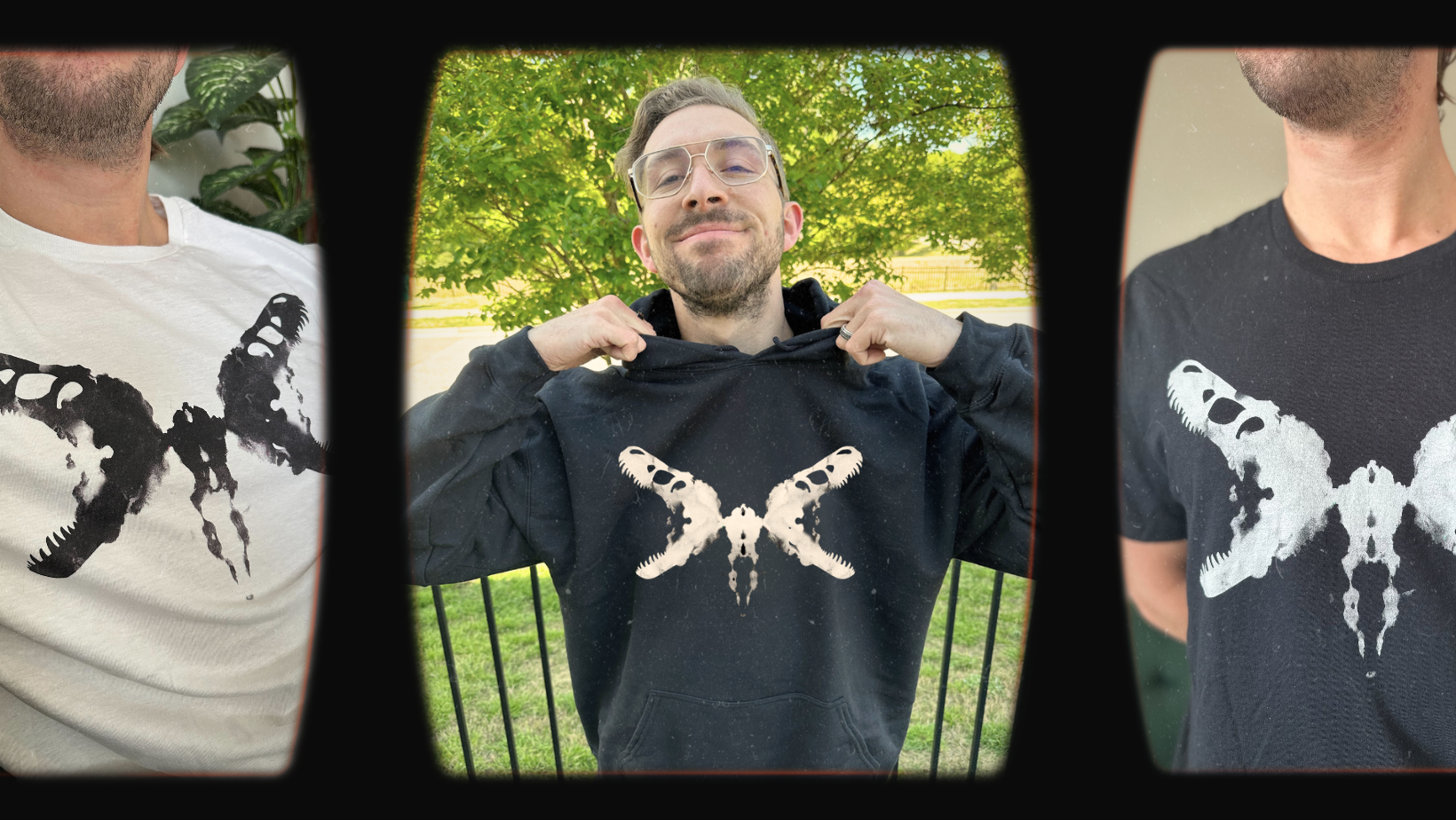
Oh and by popular demand, we brought back the Roar-schach merch. You all have been blowing up our DMs about it, so we’ve made it a permanent part of the collection. Get yours today!
Alright, Now let’s get into it 👇

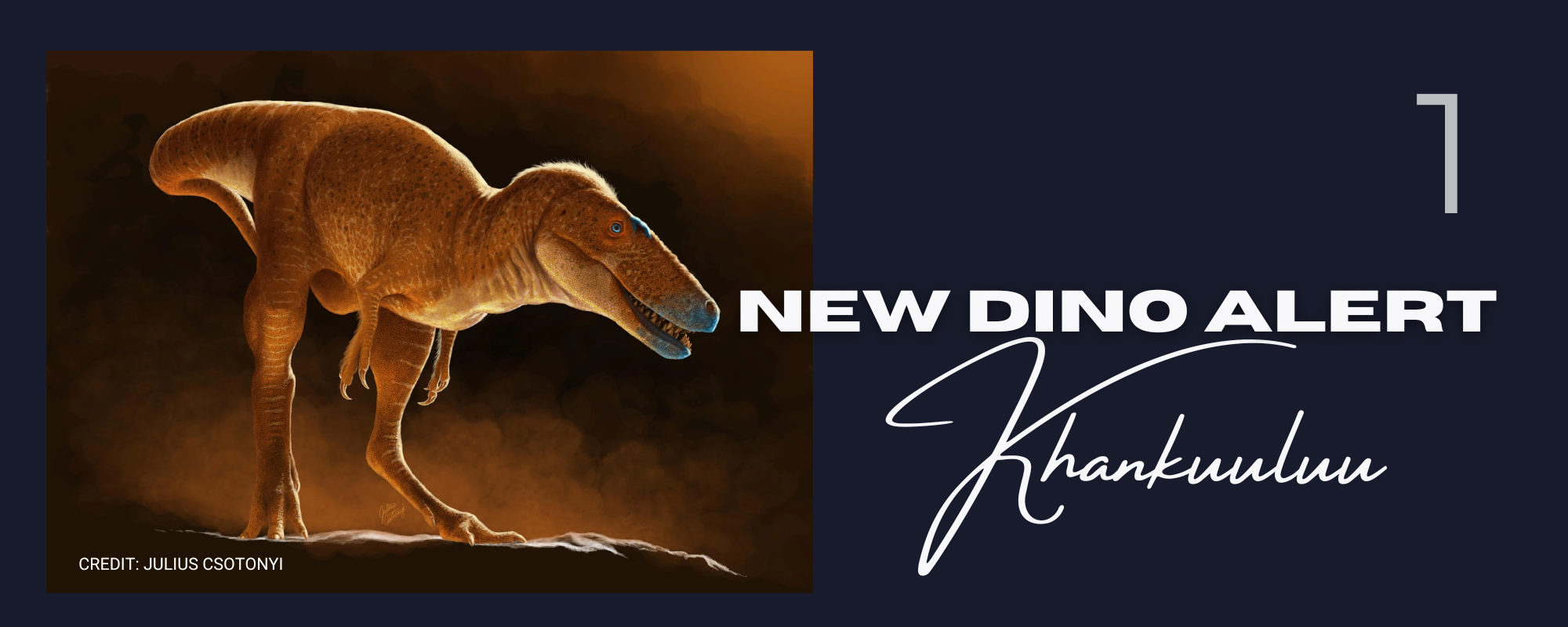
A new dinosaur was discovered and it was a faster version of T. rex! Khankuuluu is a relative of T. rex that lived in Mongolia 96 - 89 million years ago. It had a similar body frame with a large head and short two-fingered arms. But this early relative was much smaller than T. rex, measuring only 16 feet (5 meters) long. With its lightweight body and long legs, it was one of the fastest dinosaurs in its environment! Rather than rely on strength, Khankuuluu could easily chase down any animals that tried to escape.
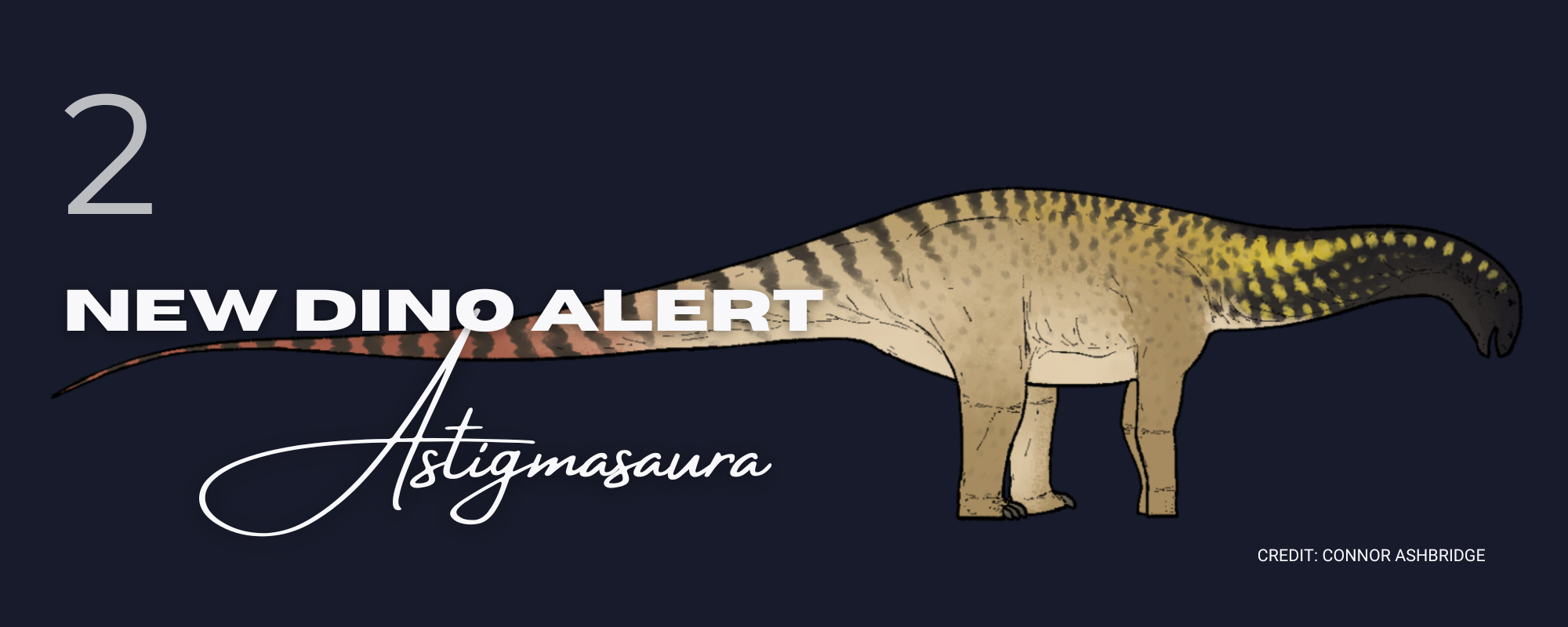
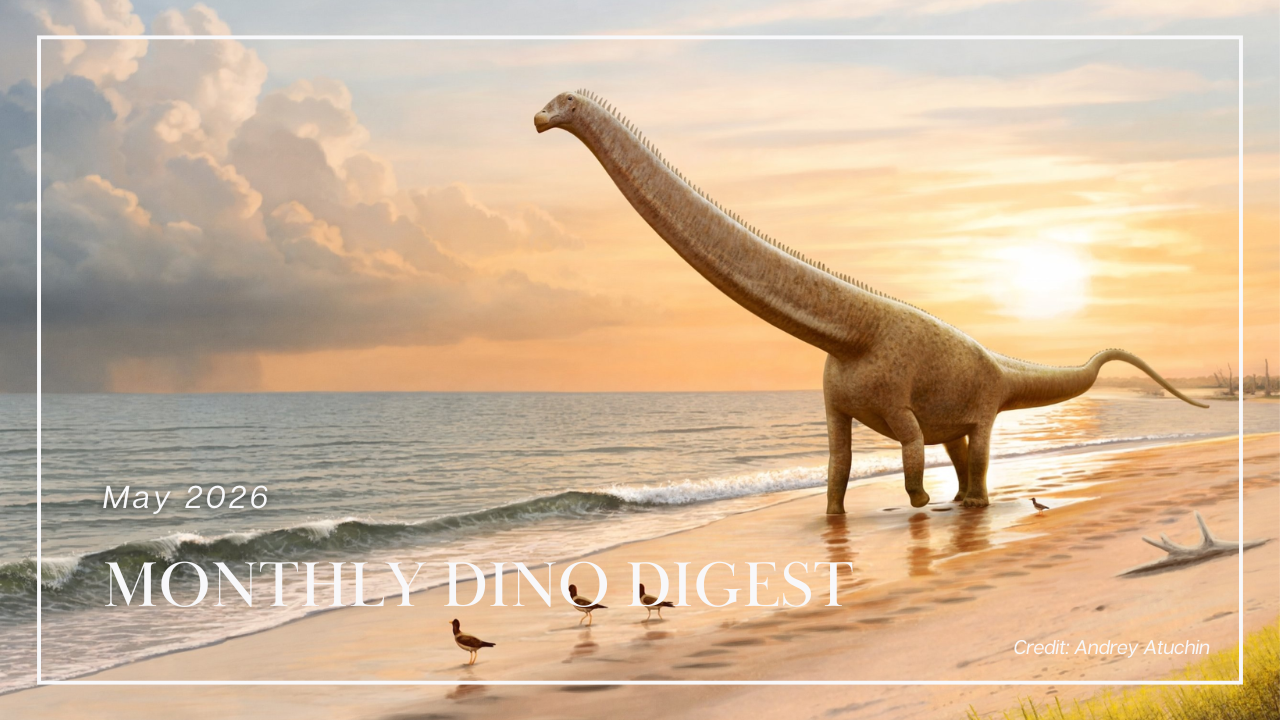
A new dinosaur was discovered and it reveals a complicated history in Patagonia! Astigmasaura is a new species of long-necked dinosaur that lived in Argentina 97 - 93 million years ago. As a Rebbachisaur, it had an especially long tail and a boxy head filled with hundreds of pencil-thin teeth. This dinosaur is interesting because within the past year, this is the third Rebbachisaur found in this time and place. These long-necked dinosaurs went extinct shortly after this time period due to climate change. But Astigmasaura, and the wealth of other species, show that these types of dinosaur were quite diverse before this extinction. It alludes to a complicated evolutionary history and unique prehistoric environment within Patagonia.
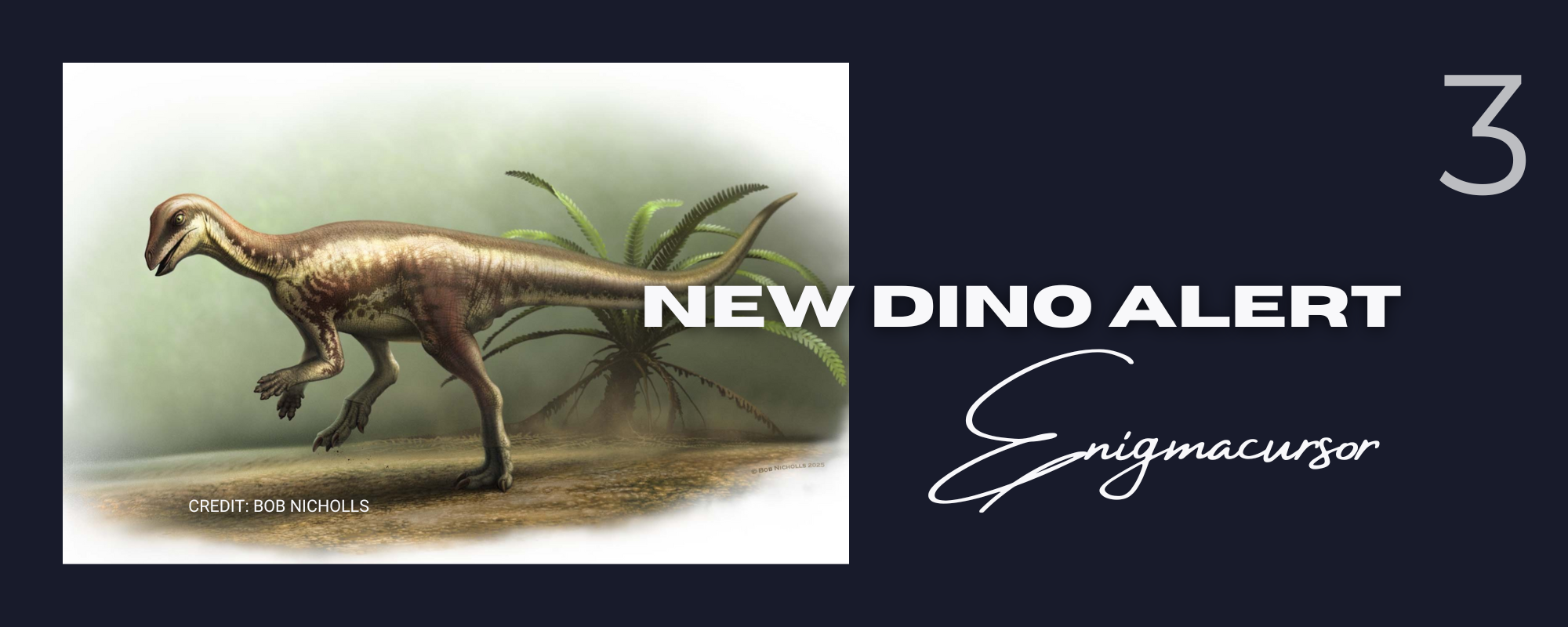
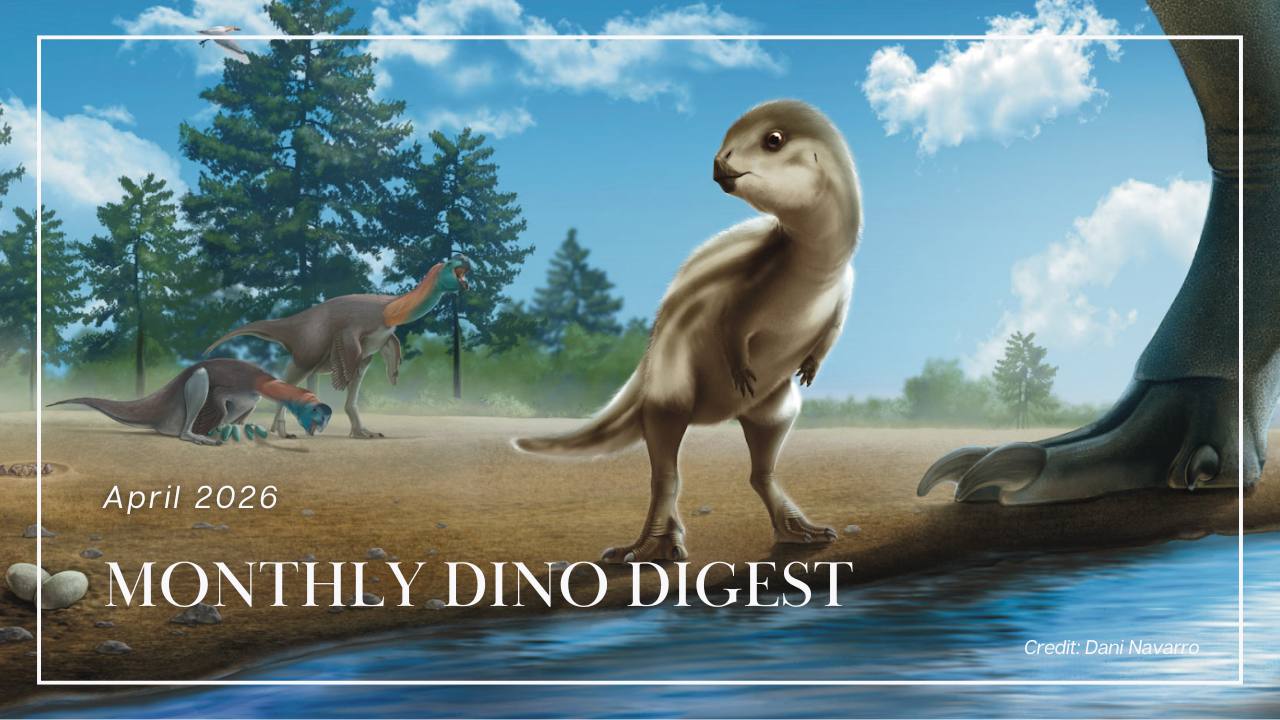
A new dinosaur was discovered and it lived in the shadows of giants. Enigmacursor is a new beaked dinosaur that lived in Colorado, 155-148 million years ago. This two-legged dinosaur was only about a 3 feet (1 meter) long and had special teeth used for chewing tougher food. But the reason Enigmacursor is so important is that it's one of the smallest dinosaurs in its environment. The western U.S. was home to massive herbivores, like Apatosaurus Brachiosaurus, and huge predators, like Allosaurus and Ceratosaurus. However, Enigmacursor was a fraction of the size of these animals which is extremely rare in this environment. It suggests that there might be a whole other side to this ancient ecosystem that involved dog-sized or smaller dinosaurs.

No need to guess what Sauropods ate anymore, now we know for sure! Remains of a dinosaur called Diamantinasaurus from Australia were found with its last meal still in its stomach. For decades, paleontologists have always guessed that these massive dinosaurs were essentially just walking factories; To support such a huge body, it was thought they ate just about every type of plant and didn’t even chew their food to save time and energy. The stomach contents show exactly that! They ate fruits, leaves from the canopies, and ferns close to the ground. All of these plants also had barely any tooth marks on them, suggesting that their stomachs were doing most of the work.

Get on the dancefloor and do the dinosaur! New trace fossils from Colorado reveal that Theropod dinosaurs performed a complex mating ritual. By analyzing unique scrapes in the ground, Theropods would gather and dance - similar to some modern birds - in order to attract mates. Males would stand in place and scrape their feet across the ground until a mate took interest. If a female was interested in the dance, they would then reproduce. Like modern sites where birds dance for mating, the site had at least 25 identifiable traces so the dancefloor was packed!


—
Q: Could there be a larger Tyrannosaurs Rex than “Scotty”?
A: It’s definitely possible! Scotty is one of the largest and most complete T. rex specimens we’ve found so far, estimated at around 8,800 kilograms (nearly 20,000 pounds) and over 13 meters (43 feet) long. But remember — fossils represent just a small fraction of the animals that actually lived. While it would be extremely rare, paleontologists estimate that the biggest T. rex to ever live could be up to 50 feet long! This hypothetical T. rex is so rare, they estimate that it would statistically take about 1,000 years of digging in Montana, the Dakotas, and Wyoming to discover such a huge T. rex.
Q: How are complete dinosaurs visualized from a single fossilized bone?
A: Because thousands of dinosaur skeletons have been found over the past 200 years, scientists now have a very good idea of how different groups of dinosaurs are built. A single bone, like a femur or jaw, can tell us what type of dinosaur it belonged to. For example, a theropod, a sauropod, or a ceratopsian all have uniquely shaped bones. Once the type is known, that bone can be compared to more complete skeletons from the same family. Paleontologists can scale up or down based on the size of the bone and its proportions. While we may not know every tiny detail, like exact skin texture, we can get a pretty good idea of the dinosaur’s overall shape and size.
Q: Thinking about getting in the field, are internships worth it?
A: Definitely! Getting hands on work experience is SO VALUABLE in this field. There’s a lot of things in paleontology that you won’t be taught in the classroom. Internships and volunteer opportunities help you learn how to excavate fossils properly, work with real collections, understand how museums or research labs operate, and allow you to network with professionals in the field. Plus, it gives you a huge advantage when applying for grad school later on because you won’t have to be trained. I HIGHLY recommend taking any internship opportunities you can!

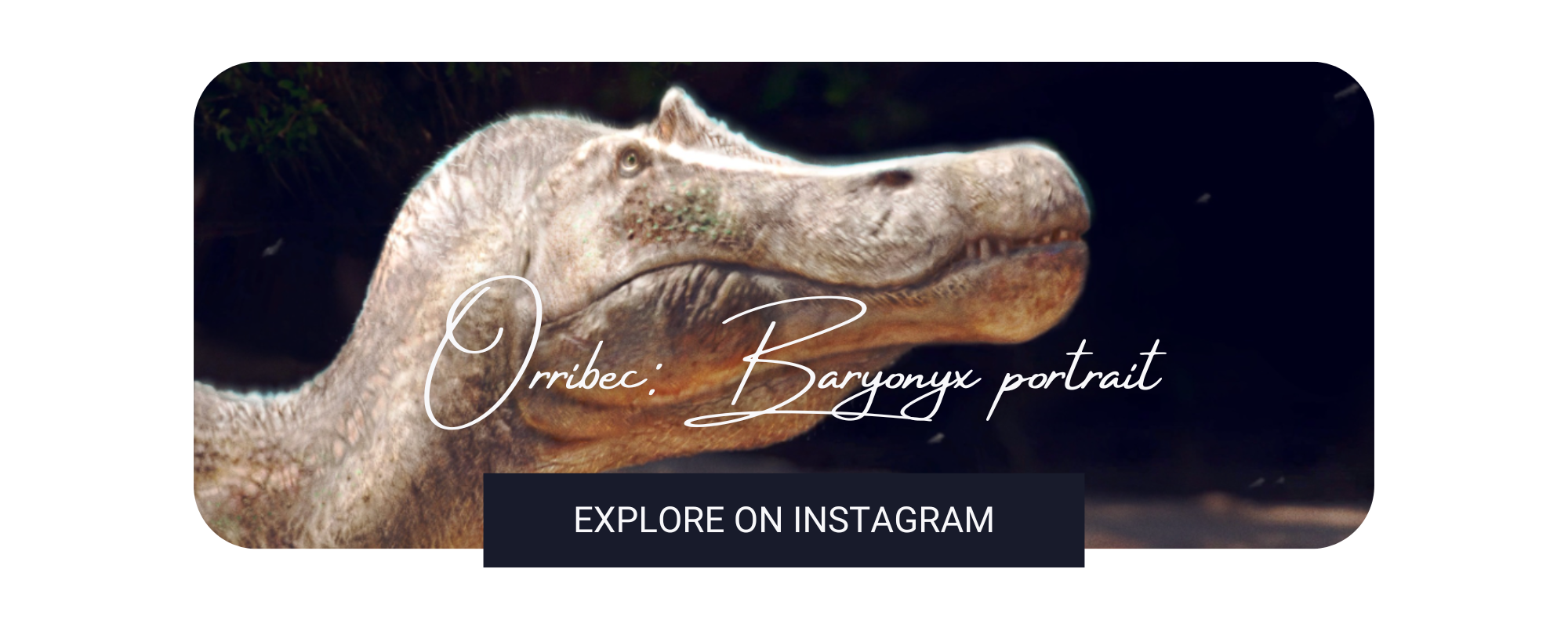

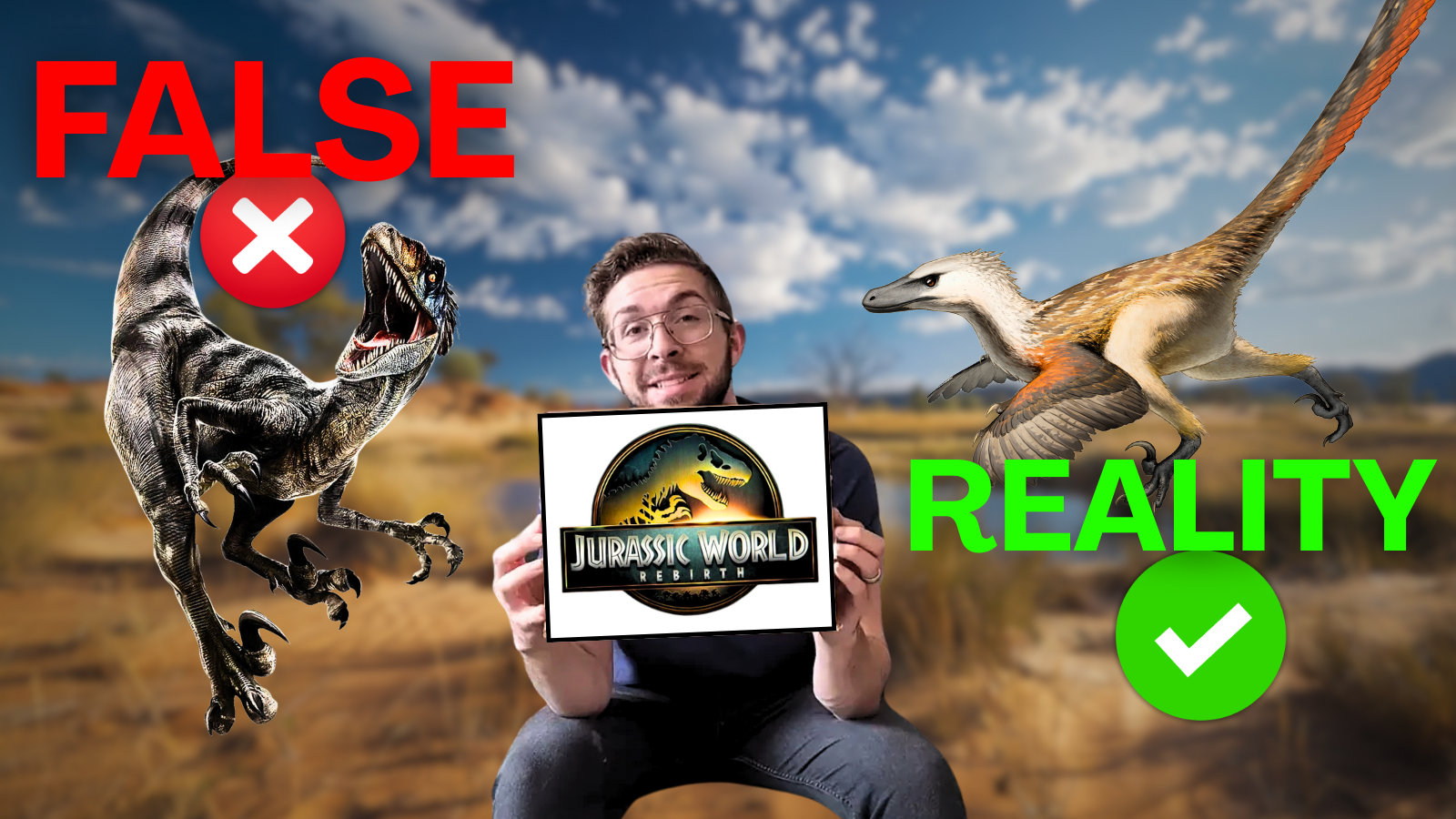
NEW VIDEO ALERT!! Hollywood vs. History: How Accurate Were the Dinosaurs in Jurassic Park Rebirth? This video takes you deep into the science behind 7 of the dinosaurs featured in Jurassic Park Rebirth — from the misunderstood Spinosaurus and to the underrated Aquilops and the not-so-real Titanosaurus. Watch it now ⤵️



THANKS FOR BEING A PART OF THE DINO GANG,


Responses