Hi Dino Gang,
Spring is on the Horizon—And So Are New Dinosaurs!
As we shake off the last of winter and look forward to warmer days, I can’t help but get excited about what this summer’s digs might unearth. There’s nothing quite like the anticipation of new discoveries, and if the past few months are any indication, we’re in for some incredible finds!
In this issue of my Monthly Dino Digest, I'm diving into some of the most exciting dinosaur discoveries and research updates from the past 30 days. Some of these finds are completely changing our understanding of dinosaur evolution, migration, and behavior. Others are giving us a closer look at species that have been hiding in plain sight, only now being recognized for their true uniqueness!
If you’re excited about these latest dinosaur discoveries, imagine having even more exclusive content at your fingertips. That’s exactly what Daily Dino Direct offers—masterclasses, expert interviews, and early video access for the most passionate members of the dino gang all for less than any of the streaming services these days.
Last month, we featured an exclusive masterclass taught by paleontologist Evan Johnson-Ransom from the University of Chicago. His research on Tyrannosaur bite forces is shaking up what we know about these legendary predators, and you won’t want to miss it! Join Daily Dino Direct today and you'll get your next 30 days for just $3!
JOIN ME INSIDE DAILY DINO DIRECT
And this is just the beginning—each month, we’re bringing expert-level masterclasses led by real-life paleontologists to share cutting-edge research, answer your burning dino questions, and take your knowledge to the next level.
Join Daily Dino Direct today and unlock a whole new world of paleontology!
Now, let's dive into the full newsletter ⤵️
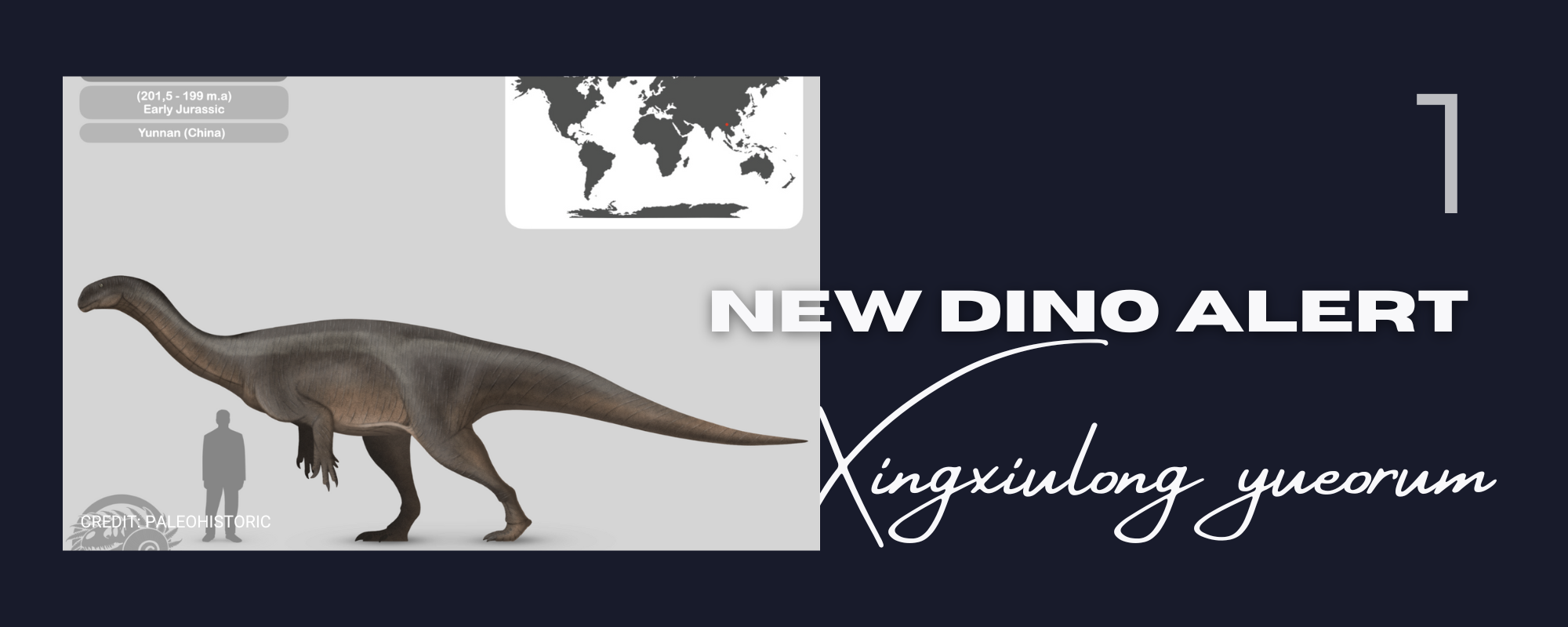
A new dinosaur was discovered and it lived during a dinosaur boom! Xingxiulong yueorum is a new early long necked dinosaur that lived in China 201 million years ago. This dinosaur was an early relative of the more famous Sauropods who still walked on two legs (Sauropodomorph). Not only was this dinosaur the second species of Xingxiulong to be discovered, it was the ninth early Sauropod to be found in China during this time period. Xingxiulong yueorum lived right after the End Triassic extinction where many prehistoric reptiles besides dinosaurs went extinct. Before this extinction, many of these prehistoric reptiles competed with dinosaurs and kept them from dominating ecosystems. But once these other reptiles went extinct, dinosaurs like Xingxiulong yueorum went on to inhabit every single ecosystem in the world, even in places closer to the North Pole, like China.
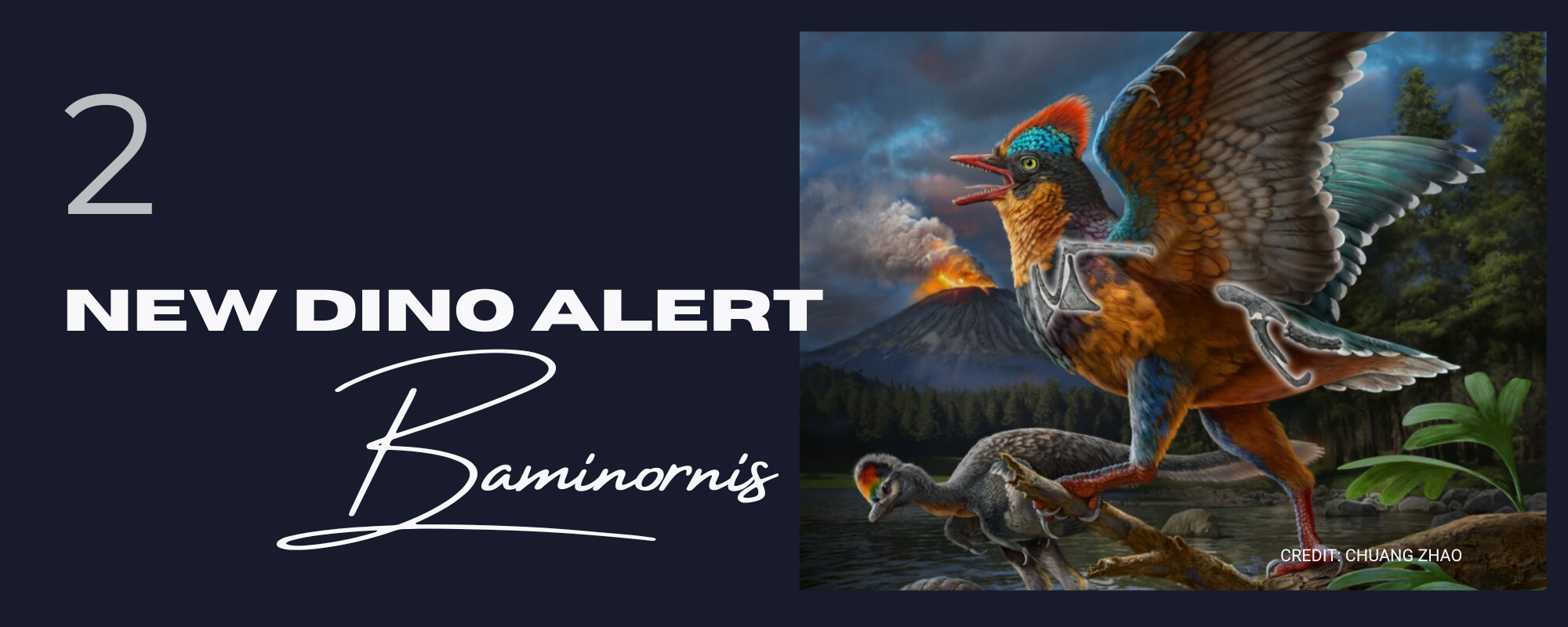
A new dinosaur was discovered and it completely changed our understanding of bird evolution! Baminornis is a new early bird that lived in China 150 million years ago. This bird would have been roughly the size of a crow, but still had teeth and claws. But what’s so unique about Baminornis is that it didn’t have a bony tail. It’s always been thought that birds lost their bony tails in the Early Cretaceous. But with Baminornis found in the Late Jurassic, this pushes back bird evolution over 20 million years earlier than expected. And based on phylogenetic reconstructions, this also means that there is likely early bird fossils that predate Archaeopteryx, the iconic first bird!
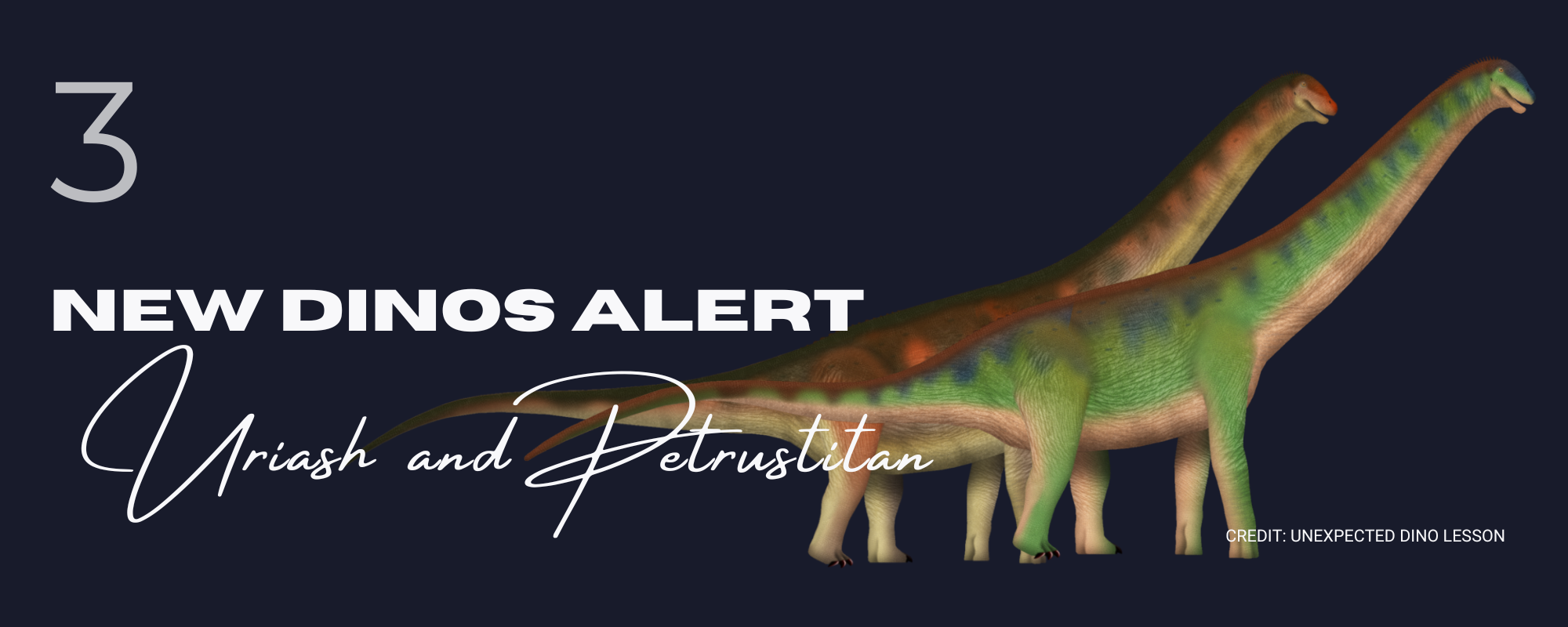
Two new dinosaurs were found and they were hiding in plain sight this whole time! Uriash and Petrustitan were two new long-necked dinosaurs that lived in Romania 71 million years ago. Originally a whole group of fossils were thought to be the dwarf sauropod Magyarosaurus, but after a second look they were actually different enough to warrant being a separate species. These two dinosaurs are special because they reveal a unique story about Europe in the Late Cretaceous. These two dinosaurs were actually found to be more closely related to Sauropods that lived in South America and Africa. In fact very few species of European Sauropods seemed to have had a long history in Europe. Therefore the authors suggest that the Late Cretaceous saw a migration into Europe of many different Sauropod families from South America, Africa, and even Asia.
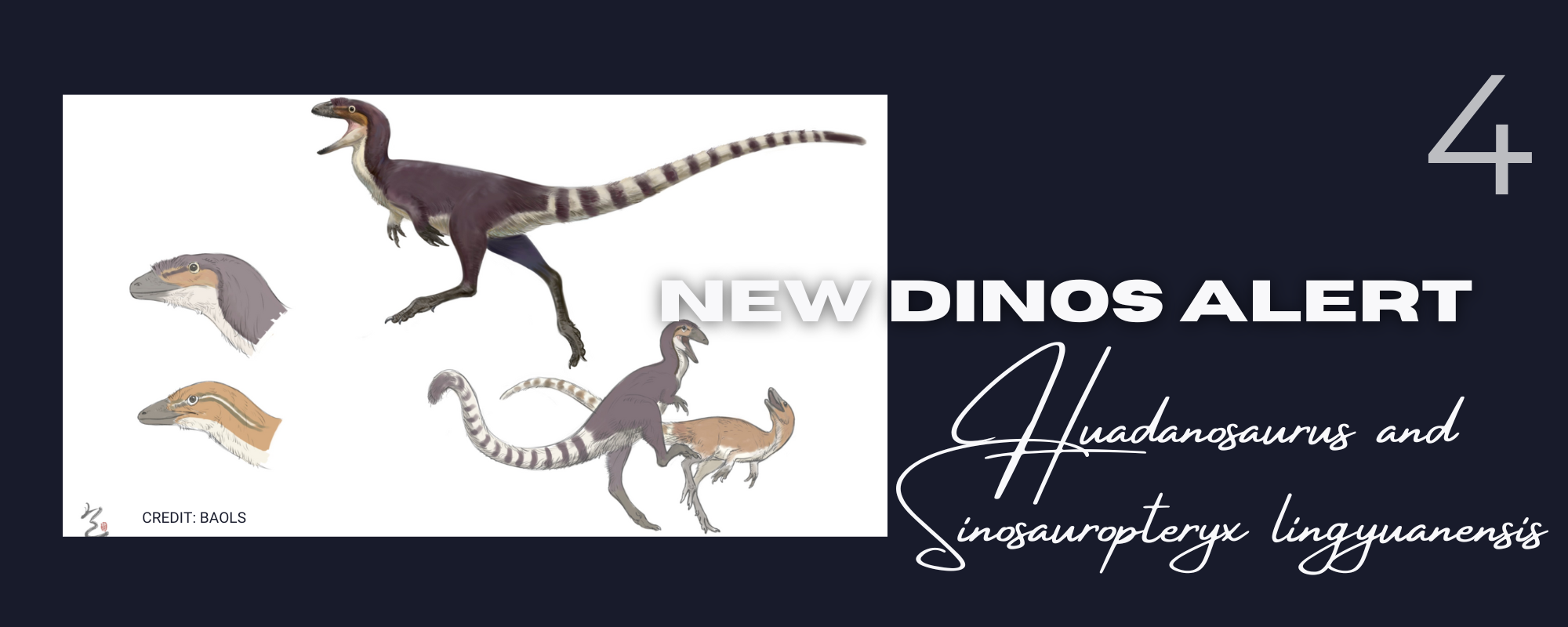
Two other new dinosaurs were discovered and they were some of the cutest animals! Huadanosaurus and Sinosauropteryx lingyuanensis are two new dinosaurs that lived in China 125 million years ago. These two dinosaurs were about the size of a house cat and would have been covered in soft down feathers, making them some of the cuddliest dinosaurs. But don’t let the cute appearance fool you, they were actually feisty little predators too! These two revealed that small feathered dinosaurs (Sinosauropterygids) had different ways of hunting prey. Huadanosaurus had a stronger skull and was likely able to deliver more powerful bites to its prey. On the other hand, Sinosauropteryx lingyuanensis was not quite as strong, but thanks to its unique color pattern may have been better suited for ambush hunting smaller prey.
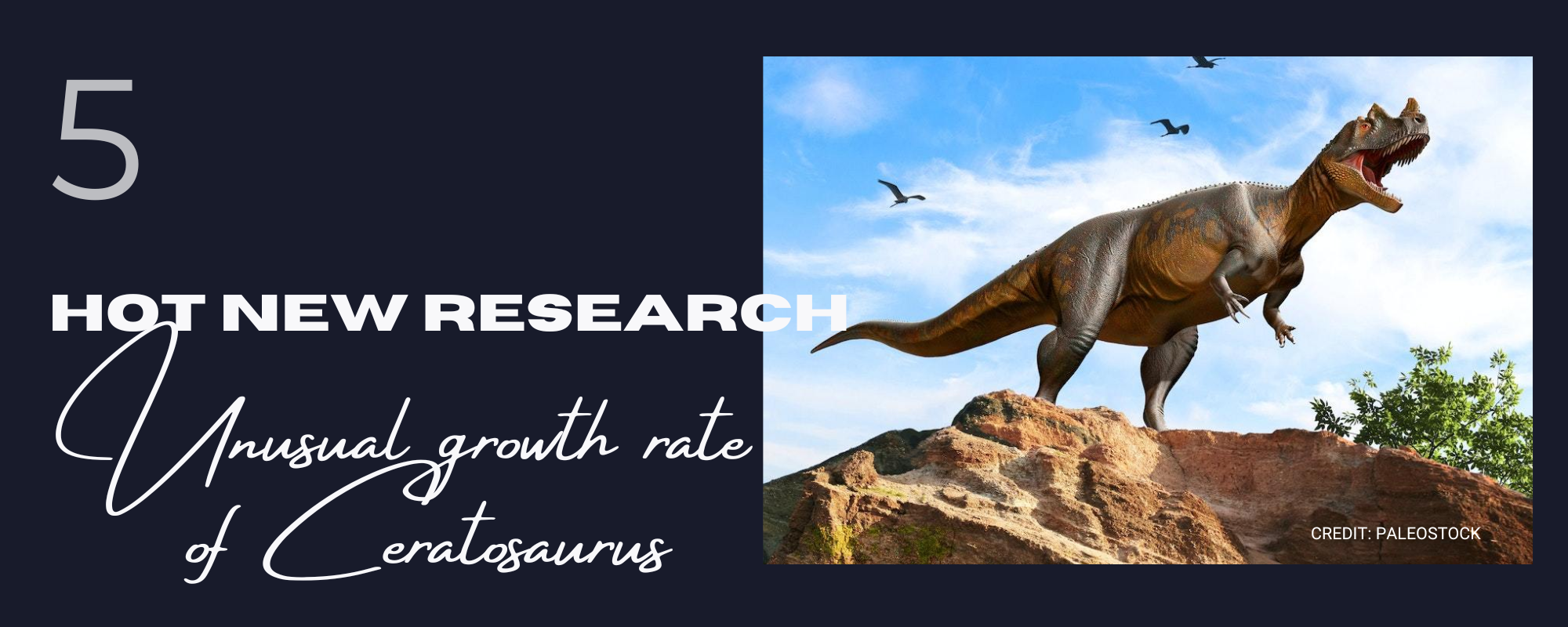
Just when we thought we knew everything about this dinosaur, its fossils have completely surprised us! Ceratosaurus is an interesting dinosaur because it’s an early relative to two totally different groups: the small and agile Noasaurs and the large and powerful Abelisaurs. Each of these groups have different growth rates, the authors of this study wanted to see how Ceratosaurus grew to understand the evolution of these dinosaurs. By cutting open the leg bones, they were able to count the growth rings preserved inside (just like tree rings) and estimate how fast this species grew. Surprisingly, Ceratosaurus had a really fast growth rate, faster than Noasaurs and Abelisaurs. After it's first two years of life, it would have been half of its maximum size. The authors say that finding juvenile Ceratosaurus would help further understand it's quick growing early years.
READ THE FULL PAPER



MONTHLY FAQ's
—
Q: What color were dinosaurs?
A: Since soft tissue is so rare in fossils there’s only a couple dinosaurs where we know what colors they were. For example, Microraptor was mostly black, Ciahong would have been Iridescent, Borealopelta would have been Pinkish orange, Psittacosaurus would have been brown on its back and tan on its underside, and Archaeopteryx would have been black with white wing tips. But besides these, we don’t really know what color dinosaurs were.
Q: What is the use of the two long vertebrae in Concavenator's back?
A: It’s not quite clear. But it may have been used to help dissipate heat. Having a higher surface area increases how much body heat is released from the body and is thus cooled down. It seems like it lived in a warm and humid archipelago environment in Europe so that large hump probably helped it not overheat.
Q: What's your favorite dinosaur to study?
A: I love studying theropods! Probably my favorite one to study were tyrannosaurs. We know so much about them, thanks to species like T. rex and Tarbosaurus, so we can test some really cool hypotheses with them that we can't with other dinosaurs! For instance, we can know how they grew, what their population dynamics were, and even what their brains were like.


Jurassic Park is in the wrong place!! In this video, we scientifically analyze dinosaur habitats and discover the best places in the world where they could live today. If Isla Nublar is not the best choice, which places would be?
SUBSCRIBE ON YOUTUBE



THANKS FOR BEING A PART OF THE DINO GANG,





Responses