Hi dino gang,
Happy November! It's pretty wild that this year is coming to a close. I've been enjoying the crisp autumn air, spending time with family, and chatting in the DMs with you all (and my dino community).
Happy November! It's pretty wild that this year is coming to a close. I've been enjoying the crisp autumn air, spending time with family, and chatting in the DMs with you all (and my dino community).
I want to send a big thank you to everyone who attended my free webinar on Fona this past month. The turnout was incredible; over 500 people watched, and I can't wait to host another one in the new year!
This month, we're diving into some incredible new dino discoveries and fascinating paleontological research, not to mention some exclusive paleo picks I've curated just for you!
Plus, if you’re craving even more dino content, now’s the perfect time to join Daily Dino Direct! As a member, you'll get early access to videos, live Q&A sessions, masterclasses, and a chance to connect with a community of dino lovers like you. I'm offering a 14-day FREE trial for you to give it a shot ⤵️
LEARN MORE ABOUT DAILY DINO DIRECT
Okay, now let's dive in to this month's digest ⤵️

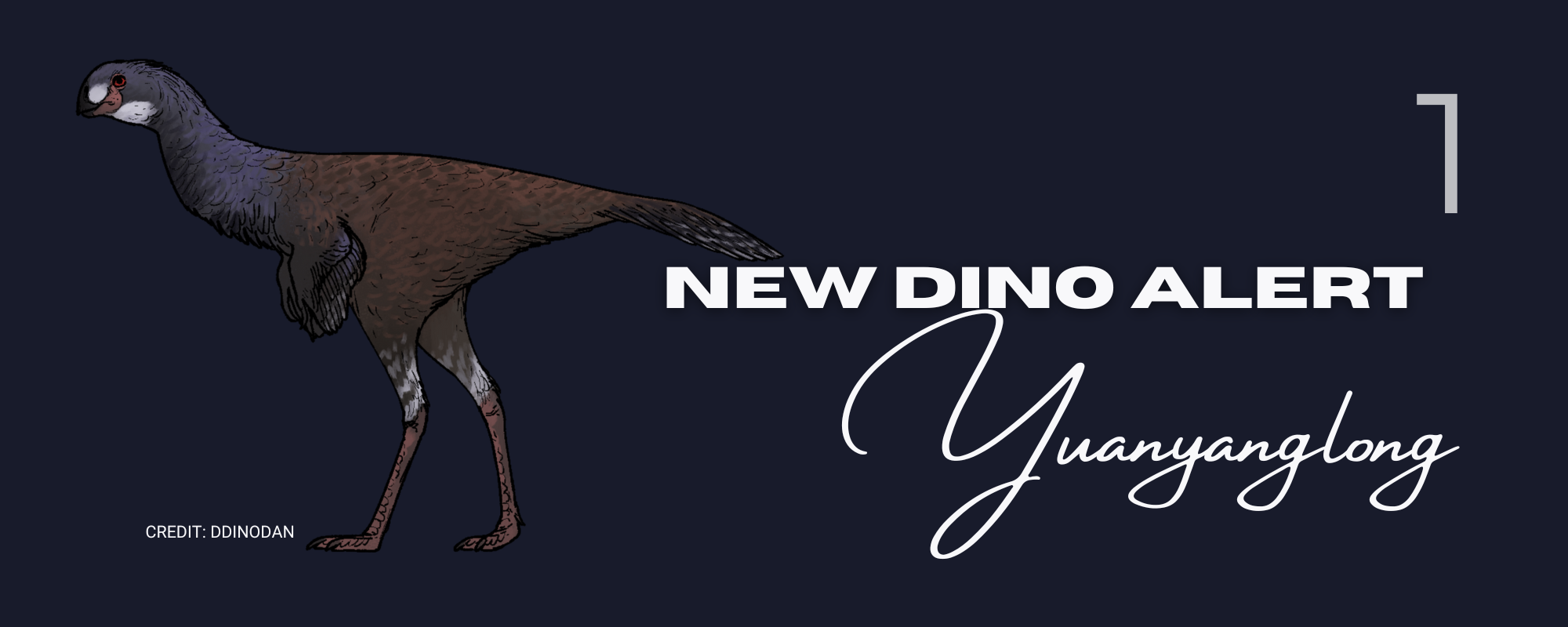
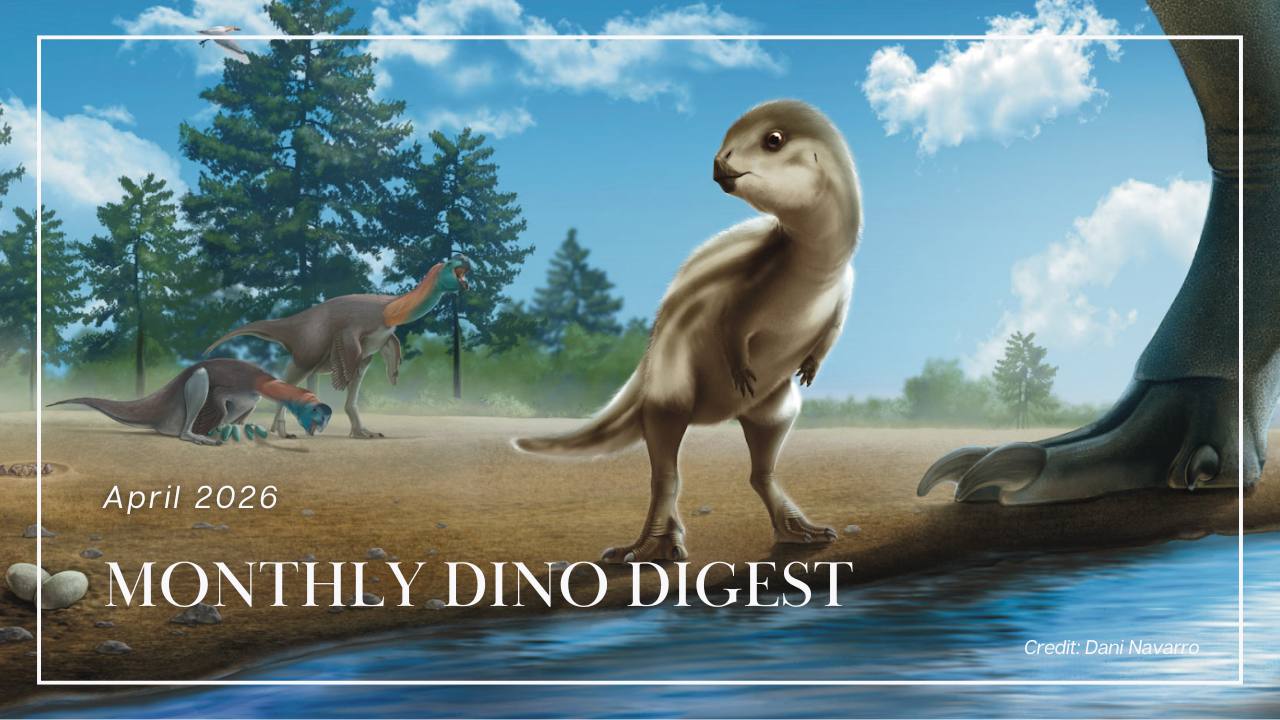
A new dinosaur was discovered and it had a unique way of eating its food! Yuanyanglong is a new feathered dinosaur that lived in China about 92 million years ago. This 3 foot (1 meter) long oviraptorosaur had a relatively small skull and beak compared to its relatives and did not have the iconic head crest. But what makes Yuanyanglong so interesting is that this dinosaur was found with tiny pebbles in its stomach called gastroliths. Because Yuanyanglong didn't have any teeth, it wasn't able to chew it's food, and therefore needed these gastroliths to breakdown it's food. However, this is different than its descendents, who don't have gastroliths, meaning that the stomachs of Oviraptorosaurs evolved to become more efficient.
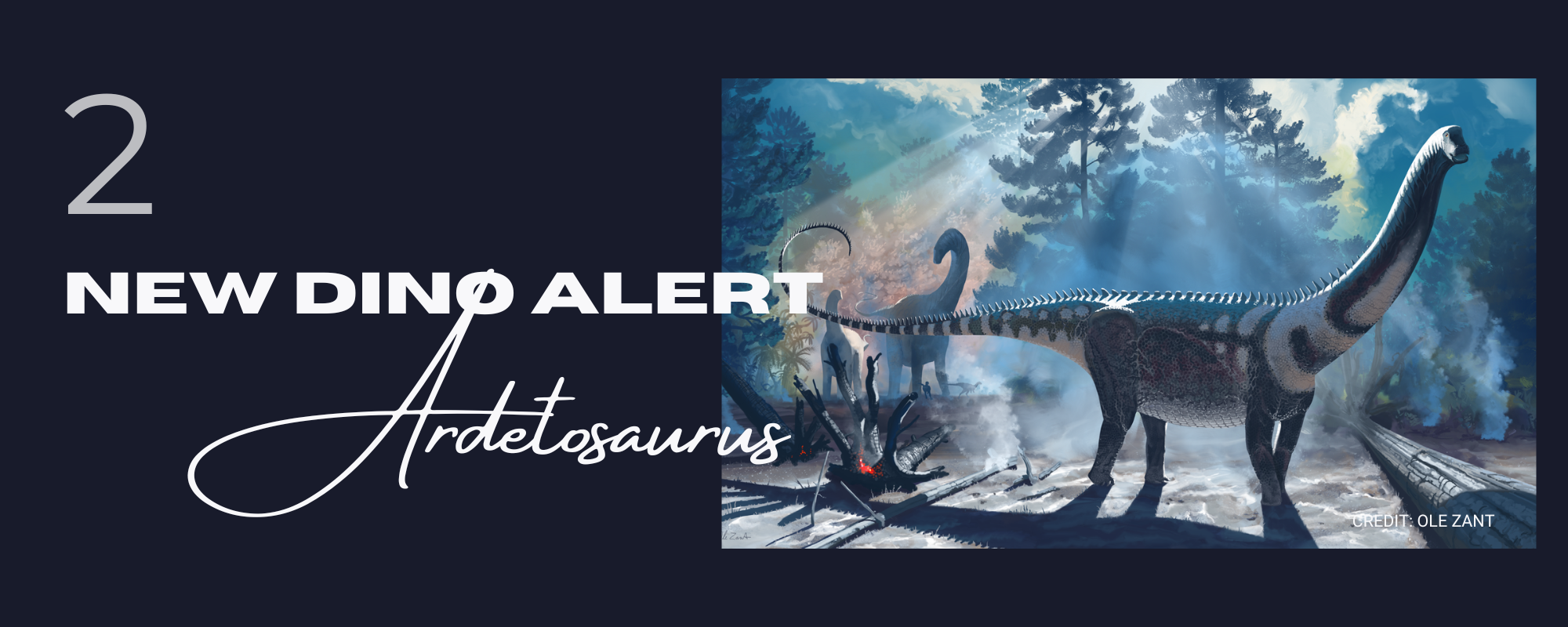
A new dinosaur was discovered and it grew insanely fast! Ardetosaurus is a long-necked dinosaur that lived in Wyoming 150 million years ago. This dinosaur was about 62 feet (19 meters) long and had a long flexible tail like its relative Diplodocus. What makes Ardetosaurus unique is that the scientists who found this dinosaur were able to calculate the age of this individual. By cutting open the rib of this dinosaur and counting up the preserved growth rings in the bone, they estimated that this dinosaur was 22 years old, but actually stopped growing by 19 years old. That means this dinosaur was growing an average of 3 feet (1 meter) a year in length!
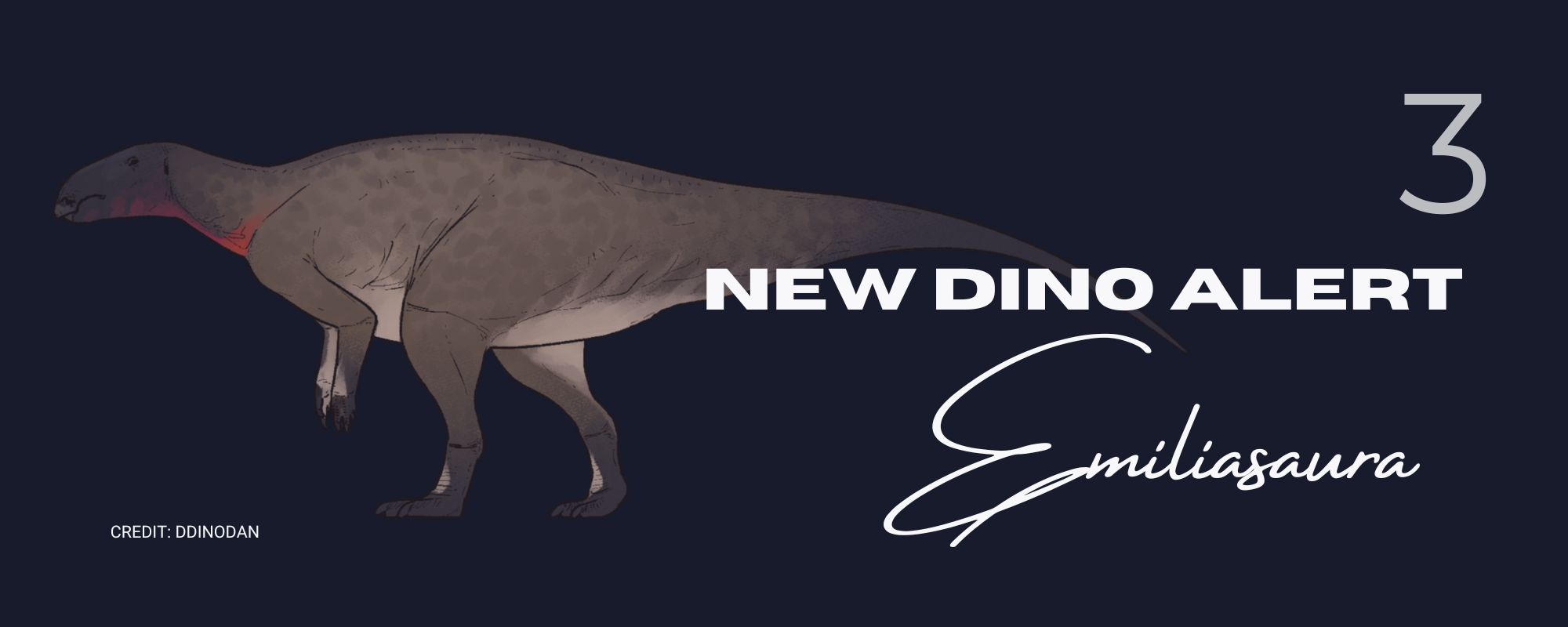
A new dinosaur was discovered and it was one of the fastest dinosaurs in its environment! Emiliasaura was a beaked dinosaur that lived in Patagonia roughly 140 million years ago. It was a type of Iguanodont that was about 15 feet (4.5 meters) long. What's cool about Emiliasaura was that, despite its size, it was adapted for speed. The thigh bone of Emiliasaura had powerful muscles connecting to its tail, which would have helped it run. This would have been crucial as it lived alongside the ferocious predator Lajasvenator.

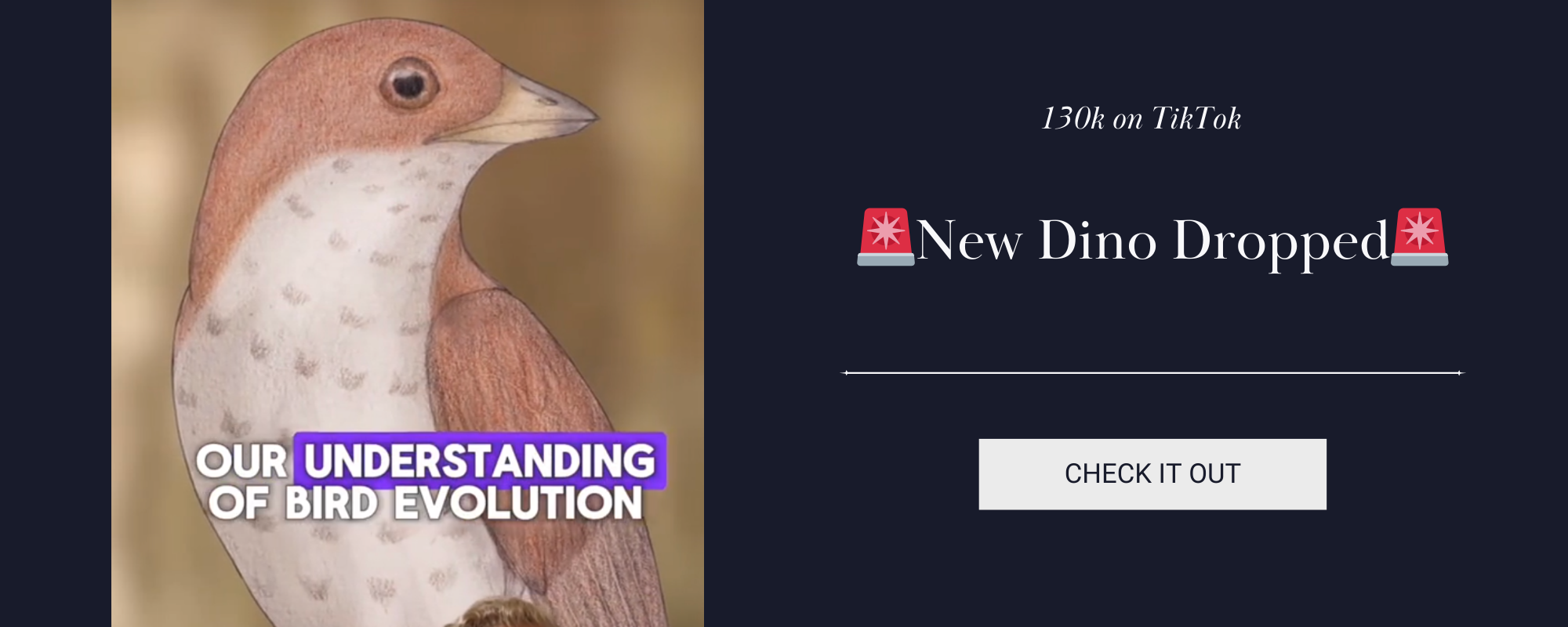
A new dinosaur was discovered and it lives in the Andes Mountains right now! Trichothraupis griseonota, or simply known as the Andean Black-goggled Tanager, is a new species of bird found in Peru, Bolivia, and Argentina. You might be wondering how we are finding new species of birds even to this day. Well the scientists were looking through museum collections and noticed differences in the body shape and feather coloring of different Tanagers from this region in the world. After a deep dive they found that the Andean Black-goggled Tanager can be distinguished from the regular Black-goggled Tanager and these two species even have different genes to confirm they are unique. The authors think that these two birds were once the same species, but were cut off from each other by the local vegetation and eventually evolved differently.

Do you think you could beat a raptor in a race? New footprints found in South Korea show that you may be left in the dust! A one in a million set of small footprints with two toes were found that likely belonged to a Microraptorine raptor based on their size. However, the gap between each footprint was the largest relative stride of any modern animal and was nearly seven times longer than the next longest stride associated with dinosaur footprints. Because the trackmaker was likely a Microraptorine, the authors suggest that this track represents a raptor using its wings to generate short bursts of flight in between each step. This is groundbreaking in that it helps paleontologists better understand the origin of flight and how dinosaurs may have used their wings differently than modern birds.


MONTHLY FAQ's
—
Q: In the ballad of big Al they said he had the body of a bird but the brains of a Crocodile. What does this mean?
A: What they meant to say is that, simply put: because Big Al is a dinosaur and dinosaurs are more closely related to birds than they are to crocodiles, they have a body that is more similar to birds. This makes sense because when you look at the skeleton of Big Al or any Allosaurus, it walks on two legs, has a very basic wishbone, and has hollow bones similar to birds. As for the brain, an Allosaurus braincase was scanned in 2005 and revealed that despite being more related to birds, the structure of the brain was very similar to crocodiles. It was better at hearing sounds at low frequencies and had a great sense of smell.
Q: What resources are there to begin a foundation of paleontological knowledge?
A: My website has a list of all the books I'd recommend to get you started in paleontology! But the best place to begin might be The Rise and Fall for Dinosaurs by Steve Brusatte. It's a pretty casual read so it's great for people just starting out!
Q: What was the first dinosaur?
A: This may be one of the most controversial and most confusing questions in paleontology! Dinosaurs actually evolved during a boom in biodiversity at the beginning of the Triassic. They evolved so quickly and look so similar to many other animals called Archosaurs that you would probably get a different answer depending on the paleontologists that you ask. One candidate that may be the oldest is Asilisaurus. It originally was thought to not be a dinosaur but research from this year suggests that it may actually be a very basic dinosaur. Another may be Nyasasaurus as it grew very quickly like dinosaurs, but didn’t look exactly like a dinosaur. But probably the safest answer would be Herrerasaurus since it clearly has all the features that make up a dinosaur.
—
Q: In the ballad of big Al they said he had the body of a bird but the brains of a Crocodile. What does this mean?
A: What they meant to say is that, simply put: because Big Al is a dinosaur and dinosaurs are more closely related to birds than they are to crocodiles, they have a body that is more similar to birds. This makes sense because when you look at the skeleton of Big Al or any Allosaurus, it walks on two legs, has a very basic wishbone, and has hollow bones similar to birds. As for the brain, an Allosaurus braincase was scanned in 2005 and revealed that despite being more related to birds, the structure of the brain was very similar to crocodiles. It was better at hearing sounds at low frequencies and had a great sense of smell.
Q: What resources are there to begin a foundation of paleontological knowledge?
A: My website has a list of all the books I'd recommend to get you started in paleontology! But the best place to begin might be The Rise and Fall for Dinosaurs by Steve Brusatte. It's a pretty casual read so it's great for people just starting out!
Q: What was the first dinosaur?
A: This may be one of the most controversial and most confusing questions in paleontology! Dinosaurs actually evolved during a boom in biodiversity at the beginning of the Triassic. They evolved so quickly and look so similar to many other animals called Archosaurs that you would probably get a different answer depending on the paleontologists that you ask. One candidate that may be the oldest is Asilisaurus. It originally was thought to not be a dinosaur but research from this year suggests that it may actually be a very basic dinosaur. Another may be Nyasasaurus as it grew very quickly like dinosaurs, but didn’t look exactly like a dinosaur. But probably the safest answer would be Herrerasaurus since it clearly has all the features that make up a dinosaur.



|
Watch my latest Youtube video! Uncover the most EXTREME & DANGEROUS dinosaurs with the Daily Dino Guy...



THANKS FOR BEING A PART OF THE DINO GANG,


Responses