Hi dino gang,
Get ready to dive into some groundbreaking discoveries that were just recently published! This month, I'm bringing you exciting new finds that showcase the incredible diversity of dinosaurs across the globe.
From an apex predator of Central Asia to a lightweight sauropod from Argentina, paleontologists are constantly uncovering new species that change the way we think about life millions of years ago. Plus, I explore a fascinating discovery about the asteroid that wiped out the dinosaurs.
But before we dive in, I want to give a huge shoutout to YOU! We've hit another major milestone on Instagram, growing to over 100,000 followers! This incredible growth wouldn’t be possible without your support and passion for all things dinosaurs! Thank you, thank you!
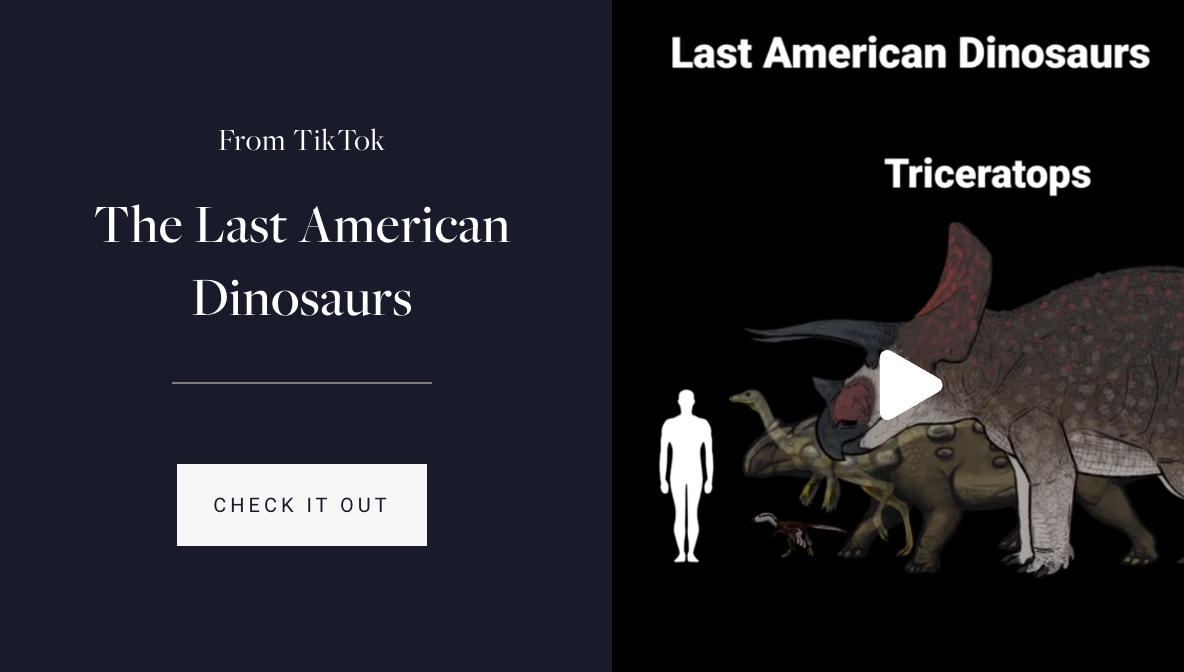
Want more daily dino guy? I just launched TikTok so be sure to give me a follow over there if you haven't already!
FOLLOW @THEDAILYDINOGUY ON TIKTOK
Okay now, let's get to the good stuff...

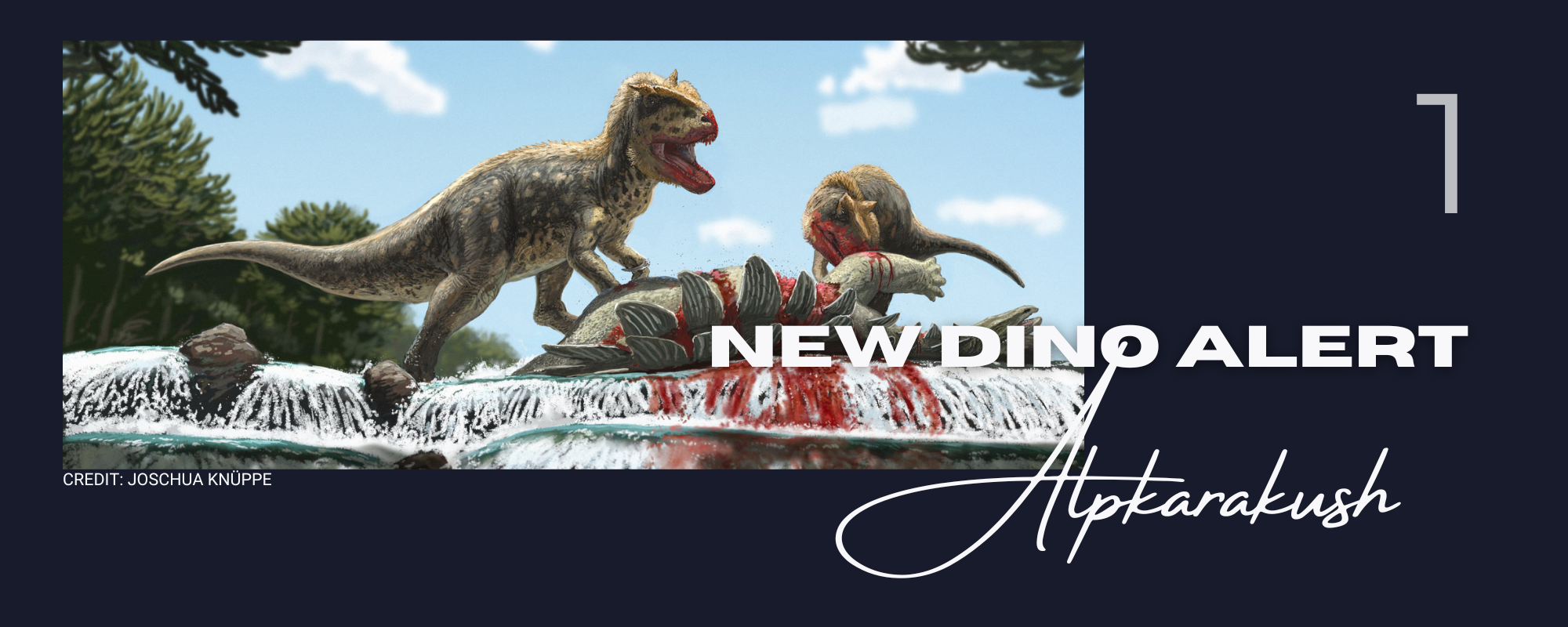
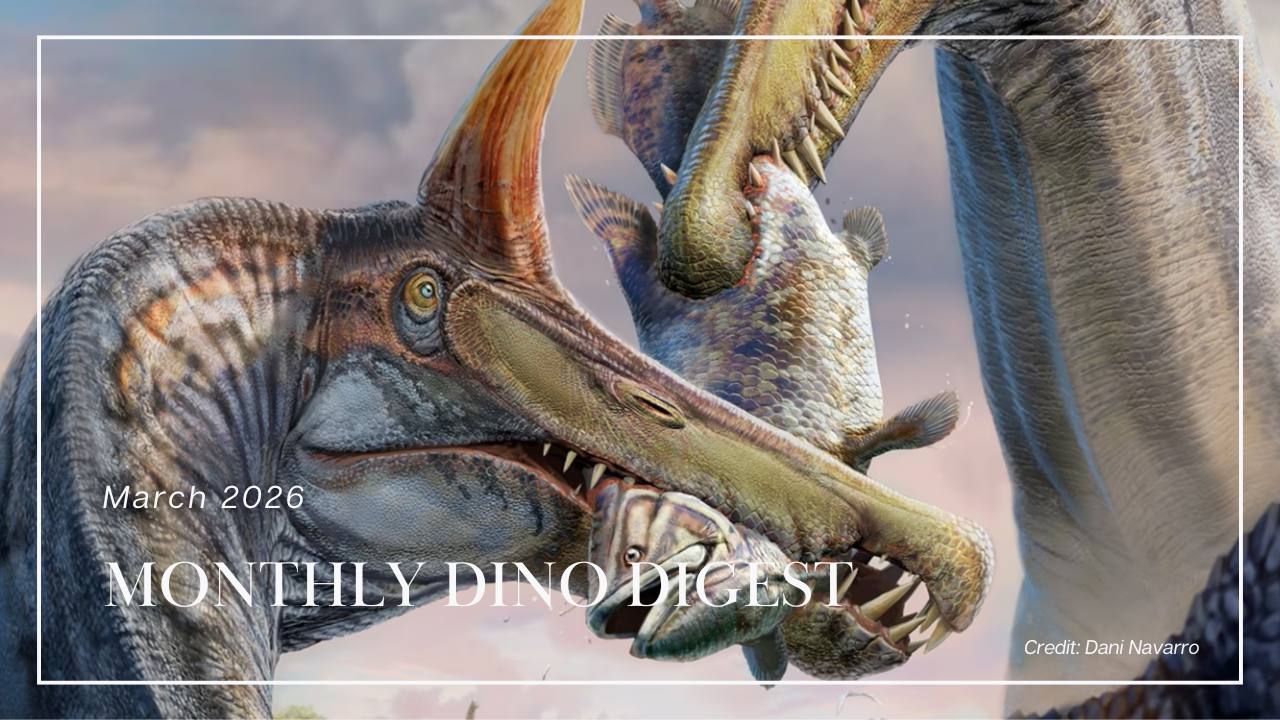
A new dinosaurs was discovered and it was the apex predator of Central Asia. Alpkarakush was a meat-eating dinosaur that lived in Kyrgyzstan 168 million years ago. This predator was about 26 feet (8 meters) long and had a pair of large horns above its eyes and two thin crests going down its
snout. What’s interesting about Alpkarakush is that it likely hunted in family packs. The paleontologists who described this dinosaur found two skeletons of Alpkarakush next to each other. After studying each skeleton, they found that one was an adult and the other was a juvenile.
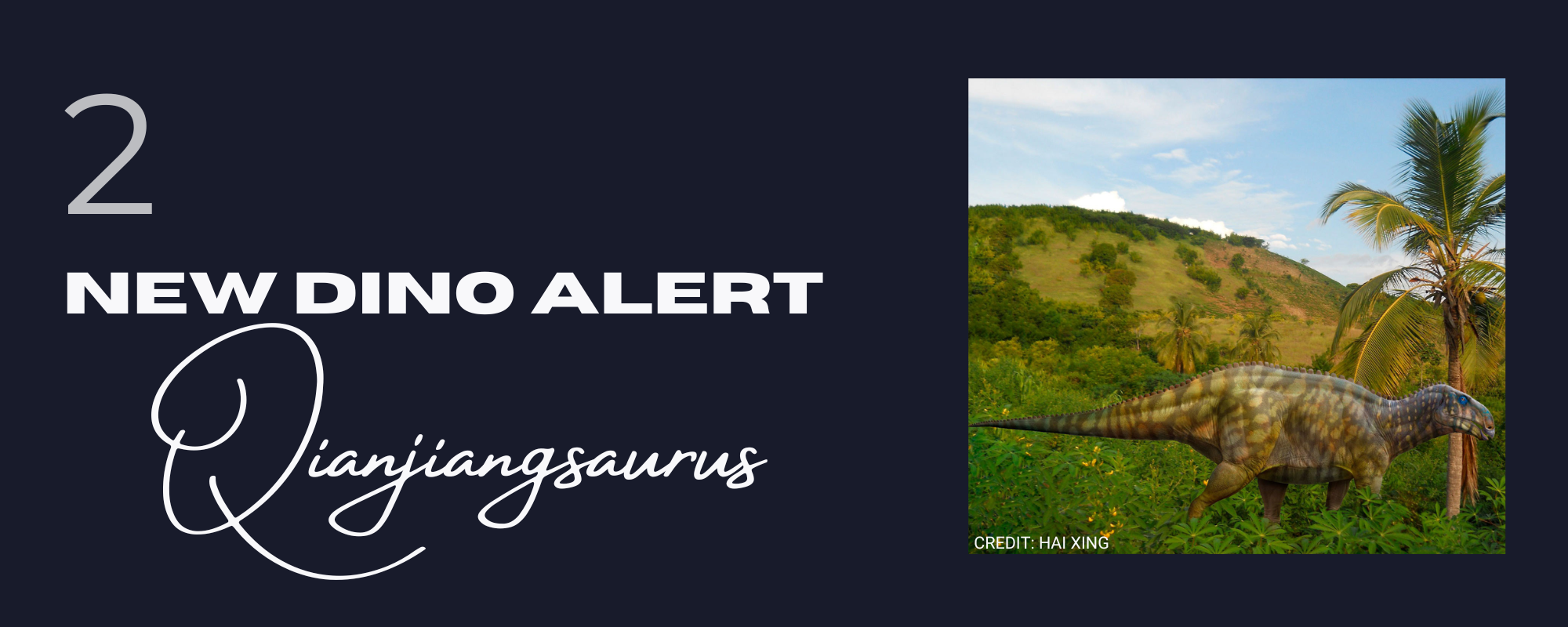
A new dinosaur was discovered that may have lived all over East Asia. Qianjiangsaurus was a beaked dinosaur that lived in China 71 million years ago. It was about 26 feet (8 meters) long and was a transitional species between larger beaked dinosaurs and duck-billed dinosaurs like Parasaurolophus and Edmontosaurus. What’s interesting about this dinosaur is that it may have had a large habitat range. While Qianjiangsaurus was found in China, the environment it lived in was very similar to those of Mongolia at the time. In fact, many of the same types of dinosaurs that lived around Qianjiangsaurus are also found in these Mongolian environments. This led the authors to suspect that Qianjiangsaurus may have roamed Mongolia as well and possibly other parts of East Asia.
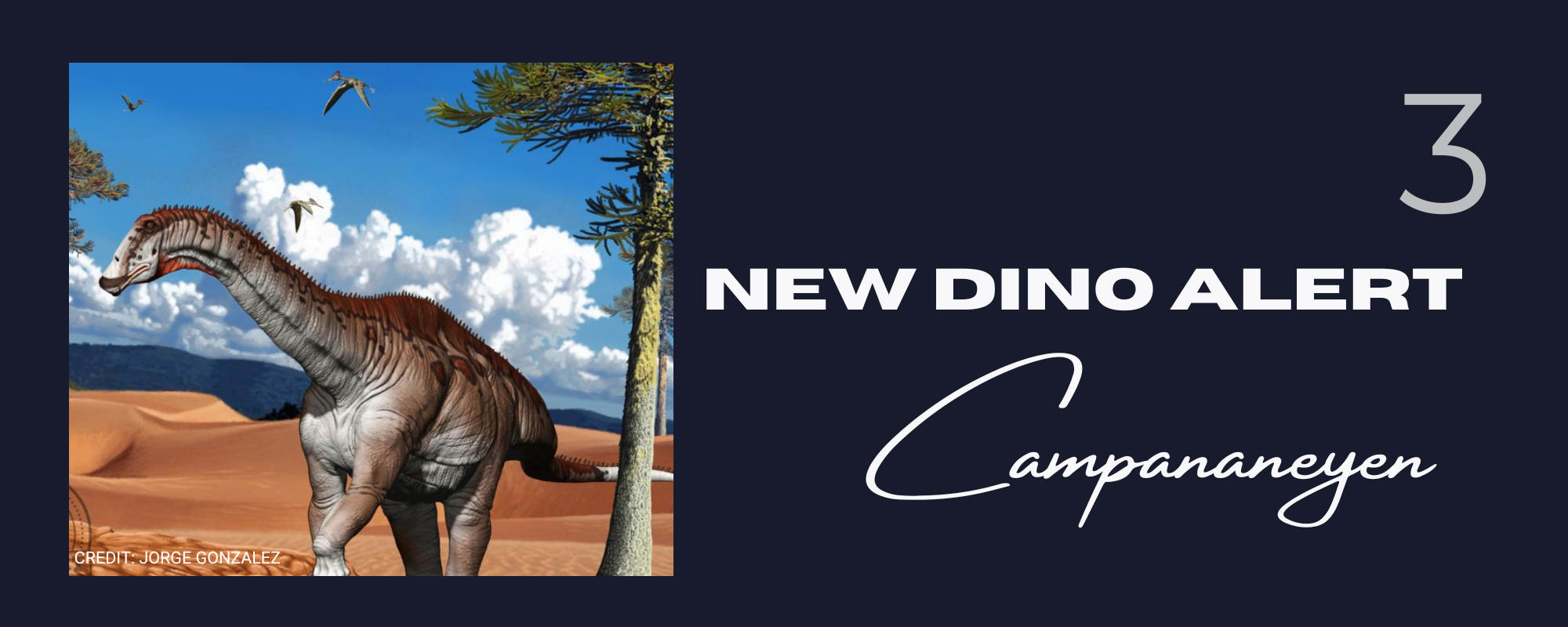
A new dinosaur was discovered and it evolved an extremely lightweight skeleton! Campananeyen is a new sauropod that lived in Argentina 99 million years ago. This long-necked dinosaur was closely related to another dinosaur discovered this year called Sidersaura. Just like its close relative, it had a boxy skull and specialized jaws filled with hundreds of thin teeth, similar to a comb. What makes Campananeyen interesting is that it evolved to bones that were more hollow than almost any other sauropod - making it one of the most lightweight skeletons of a dinosaur this size. This would have come in handy for Campananeyen as it needed to be fast in order to avoid the massive predator, Giganotosaurus.

A new dinosaur was discovered and it was found in a place where paleontologists weren’t expecting! Caletodraco is a new meat-eating dinosaur that lived in France 100 million years ago. What’s interesting about Caletodraco is that it was an Abelisaur, which are known for their tiny arms, but powerful legs. However, these predators are very rare in Europe, with Caletodraco being only one of five species of European Abelisaurs. What’s even more interesting is that it doesn’t resemble these European Abelisaurs, but looks more like Abelisaurs from South America. This suggests that these types of predators may have traveled from South America to the rest of the world.

Ever wonder where the meteor that caused the extinction of the dinosaurs came from? Now we know and it’s not from where you’d expect! Scientists gathered up debris from the meteor that killed off the dinosaurs and wanted to know what it was made of. By analyzing the composition of the meteor, they could compare it to other impact sites where the origin of the meteor is known. They found that the meteor that caused the extinction of the dinosaurs was high in carbon. However, when they looked at these other meteor debris, they realized that meteors that came from between Mercury and Mars were high in silica instead of carbon. They found that meteors from beyond Jupiter were actually high in carbon, suggesting that the meteor that caused the extinction came from the Gas planets or beyond!


MONTHLY FAQ's
—
Q: Would any of the dinosaurs be tameable?
A: Maybe! Domestication is a pretty complex process and the animal has to be willing to do it. They have to be naturally not very aggressive and want something that we would offer. So maybe something like Psittacosaurus or maybe Microraptor would be friendly enough.
Q: How do we know that “new” species (Lokiceratops) aren’t just males of another species?
A: Sexual dimorphism is really hard to test for dinosaurs because for the most part we can't tell if something is a male or a female just based on the bones. We may be able to see two different types of body types for a species, but we'd have no idea of which is which. In the case of Lokiceratops, even though it does look very similar to other Albertaceratopsini, the three main things that make it a unique species are the hornless nose, the small straight horns on the top of its frill, and the massive curved horns next to those on its frill (which are bigger than its relatives). There are lots of other smaller details too that make it unique.
Q: Can we bring back dinosaurs like in Jurassic Park?
A: Yes and No. We can’t bring dinosaurs back exactly like in Jurassic Park because that would require DNA trapped within mosquitoes; organic compounds break down after only a couple million years so any DNA from that time is already gone. But research has shown that some dinosaurs may be able to be reverse engineered from modern birds. Modern bird DNA has the remnants of its ancestors still within its massive genetic makeup. However, most of these genes have been turned off over time. By turning off genes that code for more bird like features and turning back on genes that code for more dinosaur like features, we could in theory reverse engineer a few species of dinosaurs back. But these would only be direct ancestors of birds, so no T. rex, Triceratops, or Brontosaurus (thankfully).
Have Questions?
Reply to this email + ask yours!




|
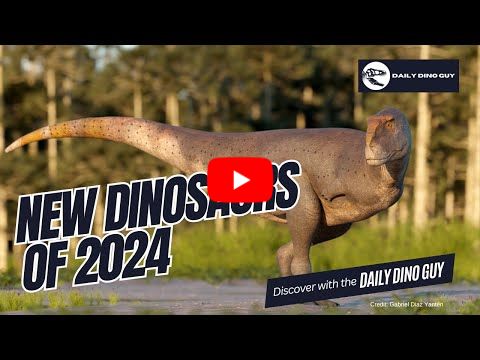
Watch my latest Youtube video! In this exciting part 3 of New Dinosaurs Discovered 2024, watch as I dive into the latest and most astonishing dinosaur discoveries of 2024…


This month, I’m excited to share some top picks that you won’t want to miss!
TetZooCon, which is the annual meeting themed around the contents and remit of the world-famous blog Tetrapod Zoology, kicks off in London on September 27th. This conference will include talks, panel discussions, book signing, events and sales relevant to the world of amphibians, reptiles, birds and mammals, living and extinct, and to matters of their evolution, biology and diversity, their portrayal in art, literature and fiction, the animals of the distant past, and to conservation, cryptozoology, domestication plus SO much more! Click below to learn more and grab tickets.
Additionally, don’t forget about the opportunity to book office hours with me! Whether you have burning dinosaur questions or just want to chat about paleontology, my office hours are the perfect chance to connect and dive deeper into your favorite topics.


Thank you once again for being part of this journey with me. I hope you find each digest as exciting and informative as the last. Stay curious and keep roaring!
CHEERS TO OUR INCREDIBLE COMMUNITY,



Responses